Welcome to the Bay Backpack!

January 19th, 2010 by Krissy

Welcome to the Bay Backpack, THE source for Chesapeake Bay education resources, field studies, trainings and funding opportunities for educators.  Take some time to explore the pages of the Bay Backpack to discover ways to get your student’s feet wet and hands dirty.  Read the blog for exciting project ideas for your school and tips on ways to integrate outdoor education into your curriculum.  Be sure to sign-up for our newsletter to receive a monthly email with news and new resources.

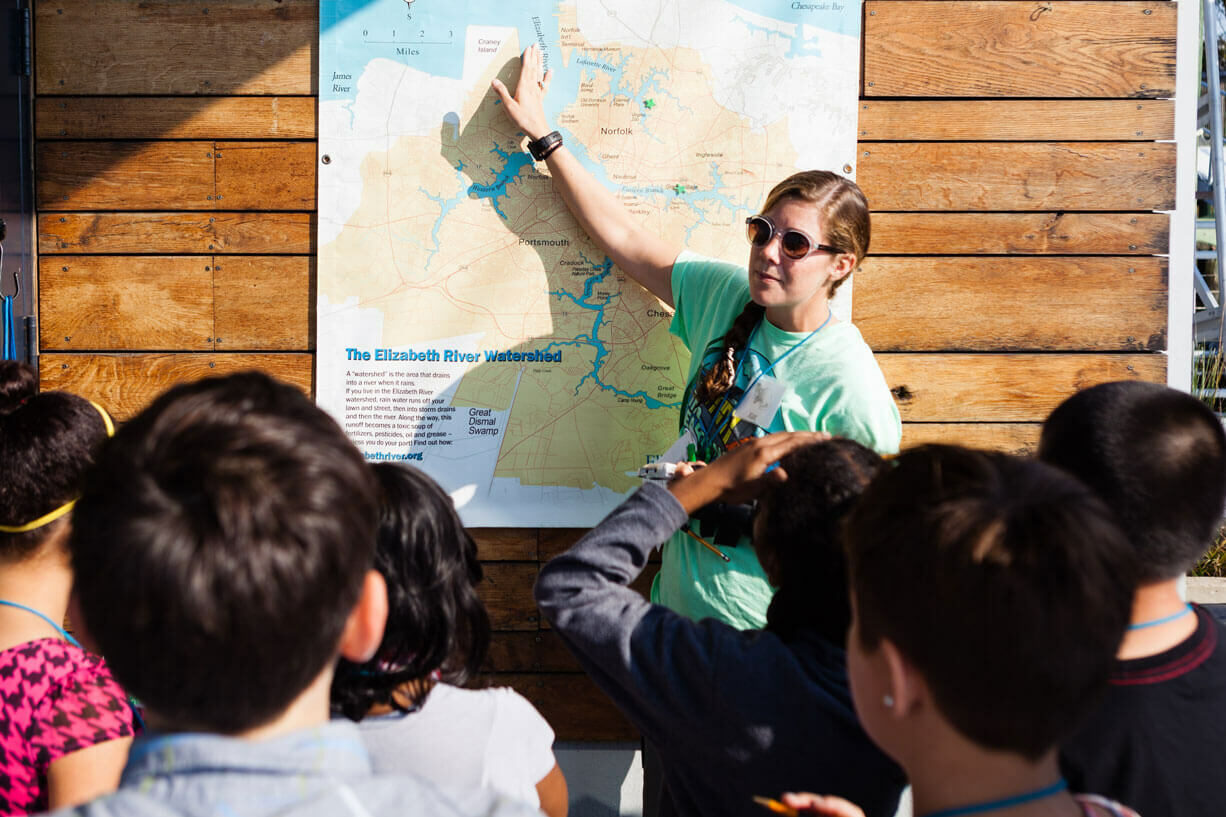
Watch our informational video about Meaningful Watershed Educational Experience or MWEEs.  MWEEs enable students to participate in hands-on environmental learning about the Chesapeake Bay watershed. Throughout the MWEE process, students develop a sense of environmental ethics and stewardship that are essential to the long-term sustainability of the Chesapeake Bay. The Bay Backpack, a resource designed to help educators provide meaningful watershed educational experiences or MWEEs to their students.

So take some time to pack your own Bay Backpack with resources and get your students outdoors!

Filed under: Teaching Resources
Tags:
Krissy Hopkins is a former Chesapeake Bay Program Staffer and is currently pursuing her PhD in geology at the University of Pittsburgh.

How to Create a Schoolyard Habitat

January 17th, 2010 by Krissy

This schoolyard habitat and garden acts as an outdoor classroom for the entire school

This schoolyard habitat and garden acts as an outdoor classroom for the entire school

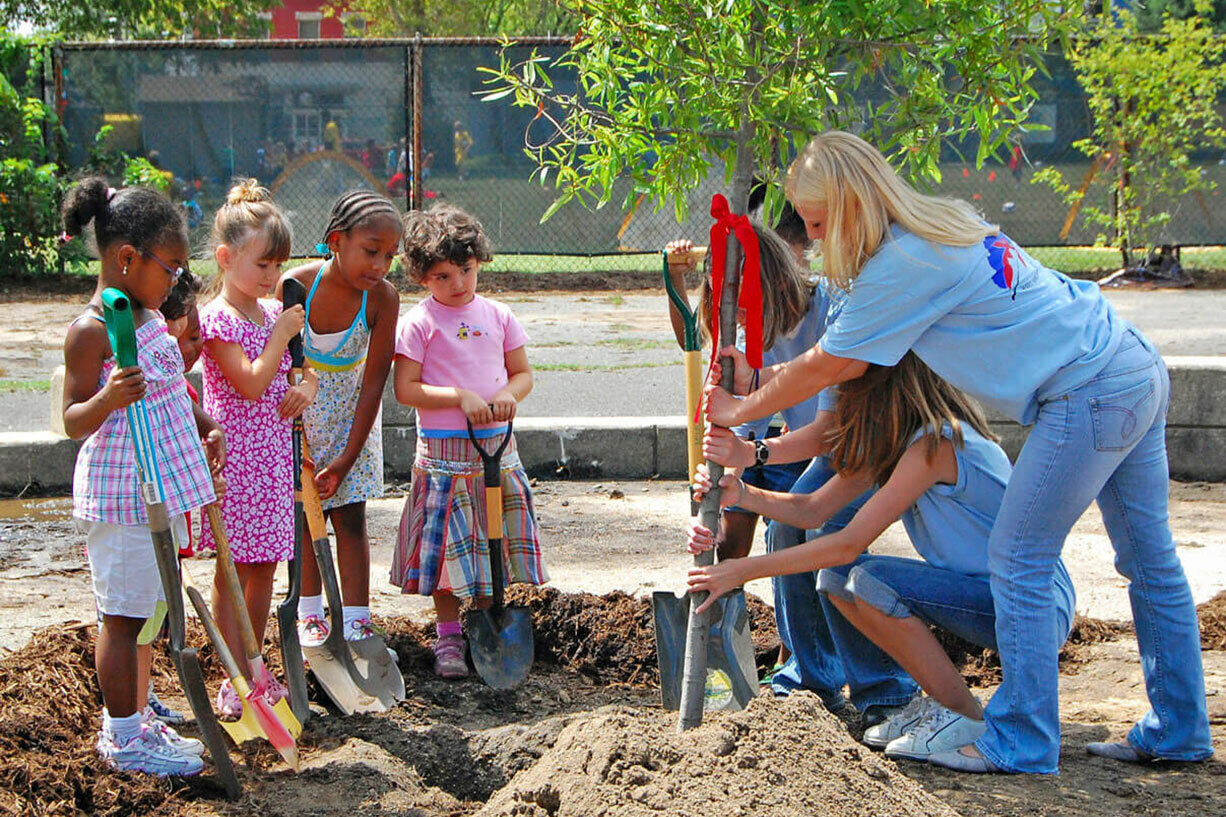
Creating a habitat for wildlife in your schoolyard will not only give local wildlife a safe healthy place to live, but it will provide students with an easily-accessible outdoor classroom and provide opportunities for students to observe wildlife in ways they may not have had otherwise. Habitat loss is an increasing pressure on wildlife. Whether you live in a city, in a forest, or in wide-open farmland, every little step you can take towards protecting your local environment will help. It will help the environment in the short-term, and spark a long-term interest in students, which could stay with them into adulthood.

After learning how to create and care for the habitat, students can observe various animals better than they might have been able to otherwise. Students can watch as beautiful butterflies land and enjoy their mud bath. In the spring, students can watch adult birds go to/from a bird house with small twigs, then watch as the parents start bringing food to the young. Finally, students might be able to see the fledglings take their first ventures out into the wild. Classes can also observe as plants begin to grow, flowers bloom, and insects pollinate. As the season changes from summer to fall, trees can provide a lesson in biology, while squirrels’ nut-gathering can be a behavior study.

A successful habitat for wildlife needs several things. Food, water, shelter/cover, and a place for animals to safely rear their young are all essentials. The National Wildlife Federation provides a guide on how to create a schoolyard habitat, as well as instructions on how to register your habitat with the National Wildlife Federation’s Certified Wildlife Habitat™ Program.

Resources:

Schoolyard Habitat Guide – Fish and Wildlife Service

Native Plants of the Chesapeake Guide – Fish and Wildlife Service

Krissy Hopkins is a former Chesapeake Bay Program Staffer and is currently pursuing her PhD in geology at the University of Pittsburgh.

Follow Captain John Smith’s Footsteps

January 15th, 2010 by Krissy
Paddlers on the upper Patuxent River. Photo Credit: IAN Jane Thomas

Paddlers on the upper Patuxent River. Photo Credit: IAN Jane Thomas

Take your students on a journey of discovery, following in the footsteps of legendary explorer Captain John Smith. During Smith’s three years in Virginia, from 1607-1609, he navigated thousand of miles through the Chesapeake’s Rivers.

You and your class can recreate a small part of Smith’s Voyage by paddling or kayaking along the Captain John Smith Chesapeake National Historic Trail. The trail is a great way to get your students outside to learn the history and meaning behind Smith’s journey. Learn about Native Americans, including the tale of Pocahontas, and settlers’ encounters with them. Or visit the bay’s bountiful diversity of plants and life and learn how the environment has changed over time.

Begin charting your course NOW!

Additional Resources:
Chesapeake Now and Then – National Geographic

Filed under: Field Studies
Tags: , ,
Krissy Hopkins is a former Chesapeake Bay Program Staffer and is currently pursuing her PhD in geology at the University of Pittsburgh.

Become an Oyster Gardener

January 10th, 2010 by Krissy
After tending their oyster garden all school year, these Virginia students released their oysters into the river.

After tending their oyster garden all school year, these Virginia students released their oysters into the river.

Tending an oyster garden is a great way to get your students actively involved in efforts to restore the Chesapeake Bay. The Eastern Oyster is one of the most important species in the Chesapeake Bay because of its ability to filter water. One adult oyster can filter up to 50 gallons of water a day. But because of over harvesting and disease the oyster population is at 1% of its historic level. By becoming an oyster gardener your class can help boost the oyster population and make the waters of the Chesapeake a little cleaner.

Here’s how you can participate. Your class can construct oyster cages out of wire mesh or PVC piping. The cages are then filled with baby oysters called ‘spat’ that you will care for over the next year. Oyster cages can be hung from a pier or piling close to your school. During the year your students will have to care for your oyster cages, cleaning the muck off of them weekly. Once your oysters mature and grow they will be collected and planted in a sanctuary reef.

You can integrate math, science and writing skills into an oyster gardening project by measuring the growth of your oysters over the school year and having each student keep an observation journal recording any other critters you find living in the oyster cages. You can also teach your students about the historic oyster catch through activities such as Oysters and a Clear Bay.

To find an oyster gardening program in your area visit Marylanders Grow Oysters, the Chesapeake Bay Foundation’s Oyster Program or Virginia Oyster Gardening Program.

Additional Resources:
Oyster Gardening Guide (pdf.)

Krissy Hopkins is a former Chesapeake Bay Program Staffer and is currently pursuing her PhD in geology at the University of Pittsburgh.

Use the Climate Change Toolkit

January 6th, 2010 by Krissy
Explore the U.S. Global Change Research Program’s Climate Change, Wildlife and Wildlands Toolkit.

Explore the U.S. Global Change Research Program’s Climate Change, Wildlife and Wildlands Toolkit.

Interested in teaching your students about climate change? Check out the U.S. Global Change Research Program’s Climate Change, Wildlife and Wildlands Toolkit. The kit, designed for both formal and informal educates, allows you to explore a specific ecoregion. In the Chesapeake watershed your region is either the Eastern Forests or Eastern Coastline. The kit will help you teach about climate change and how it’s affecting wildlife and wild lands and show you how to become a “climate steward.”

The Climate Change toolkit contains the following resources:

  • Back to Basics – basic Q & A’s
  • Case Studies – explain the regional impacts on climate change based on your ecoregion
  • Activities for Students – science, social science, math, language arts, and art activities.
  • Glossary of Scientific Terms
  • Climate Change Wildlife & Wildlands Video – 12 minute video on climate change and its impact on wildlife and their habitats

You can download the toolkit online or order your FREE copy from the National Service Center for Environmental Publications at: 1-800-490-9198.

Krissy Hopkins is a former Chesapeake Bay Program Staffer and is currently pursuing her PhD in geology at the University of Pittsburgh.

Grant Proposal Anatomy 101

January 4th, 2010 by Krissy

Here’s a lesson in grant application anatomy 101. A successful grant application is one that is thoughtfully prepared, organized and concise. A solid application has the following components;

1. Project Summary
Describe the overarching goal of your project; including how much money it will cost, how many years it will take to complete and the audience reached

2. Project Description
Describe in detail what your project will achieve (i.e. how your goal will be achieved and how your project meets the goals of the grant program).

3. About Your Organization
Explain the knowledge and experience your organization has to successfully achieve your overall project goal. Include resumes for each key contributor.

4. Project Budget
Provide a detailed spreadsheet with narrative to support the requested items or activities (personnel/salaries, fringe benefits, travel, equipment, supplies, contract costs, and indirect costs).

5. Project Outreach Strategy
Explain how you will publicize the work you are doing (i.e. via local newspapers, conferences or newsletters).

6. Demonstrated Financial Need
Explain why other funding sources cannot fund all of the proposed work. List all other sources of funding that are or have been sought for the project.

7. Project Evaluation
Explain how you will measure the success of your project through the collection and documentation of information about your project’s outcomes. These outcomes may be the number of students reached or schoolyard habitats installed.

Extras
• Letters of support
• Resumes of personnel
• Examples of products or programs to demonstrate credibility

Filed under: Funding
Tags:
Krissy Hopkins is a former Chesapeake Bay Program Staffer and is currently pursuing her PhD in geology at the University of Pittsburgh.

Get Paid to Recycle with Abitibi

January 3rd, 2010 by Krissy

Looking for a way to fund field trips for your students or trees to plant on school grounds? Here is a simple, cost-free way to raise some funds and help the environment.

The Abitibi Paper Retriever Program will pay you to recycle unwanted newspapers, magazines, mail, catalogs and office paper. Abitibi will supply your school with a large green and yellow Paper Retriever bin, at no cost, where you can collect recyclable paper from your school and the surrounding community.

Paper you collect will be picked up biweekly and taken to a local mill to be remanufactured into newsprint. A scale on the truck that picks up your paper weighs the amount you recycled and your school is paid for each pound of paper. So the more you recycle, the more you raise!

Along with raising funds, your class can be actively involved with the recycling effort and learn the value of recycling to the environment through a Monthly Retriever Scorecard. Using this scorecard, your students can track the tons of paper you’ve recycled, the money you’ve earned and the ecological impact of your efforts.

Get your school involved HERE.

Filed under: Funding
Tags: ,
Krissy Hopkins is a former Chesapeake Bay Program Staffer and is currently pursuing her PhD in geology at the University of Pittsburgh.