Why Teach About the Clean Water Act?

October 15th, 2012 by Sarah

Bringing in the catch on the Chesapeake Bay during the 2011 Youth Fishing Adventure. Image credit: Janet Krenn/VASG

Do you think we should be able to safely fish and swim in our nation’s waters?  It may sound like a pretty basic goal, but these rights have not always been protected with the same vigor as they are today.

Though it was originally enacted in 1948 as the Federal Water Pollution Control Act, the Clean Water Act was totally revised in 1972 to give the Act its current shape.  This federal regulation set a new national goal “to restore and maintain the chemical, physical, and biological integrity of the Nation’s waters”, and set an overarching environmental goal that all waters in the United States be “fishable” and “swimmable.”

Why Should YOU Teach About The Clean Water Act?

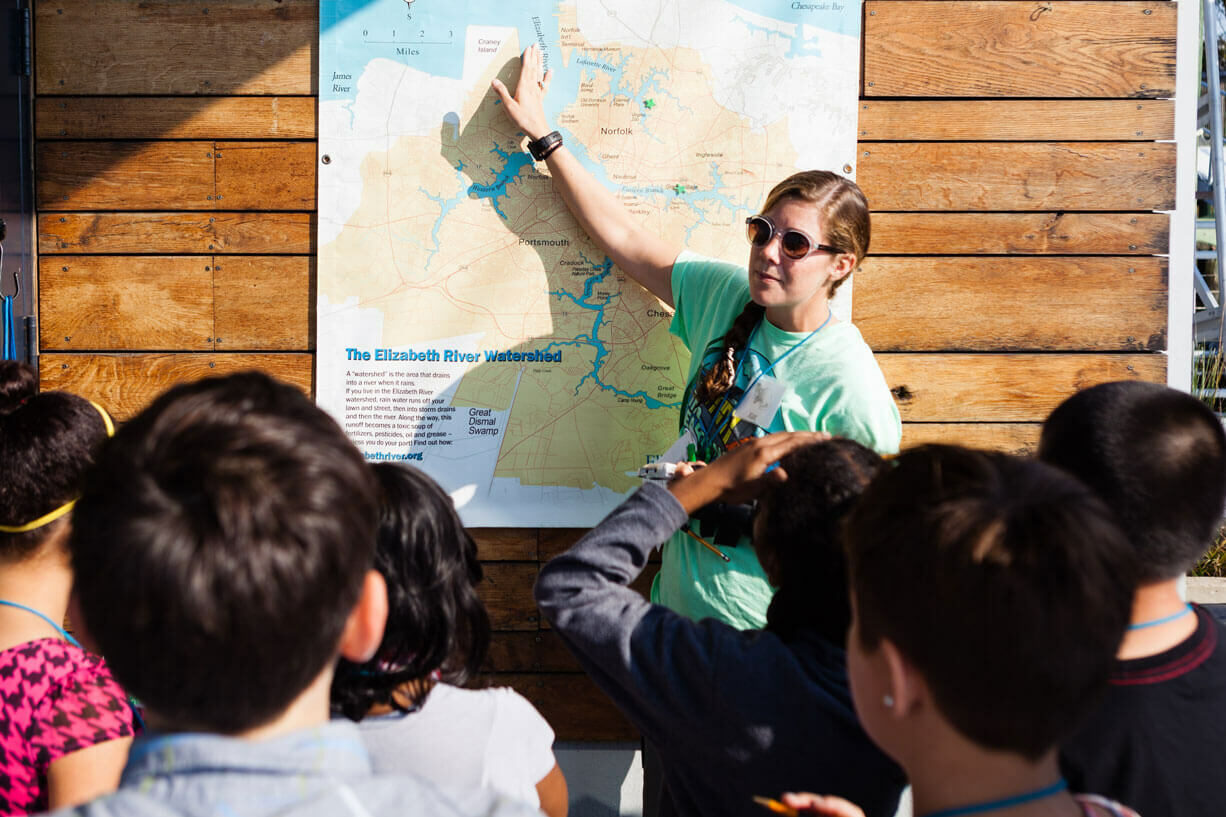
This October marks the 40th anniversary of the Clean Water Act!  On October 18, 1972, Congress passed the Clean Water Act, providing a comprehensive strategy for dealing with water pollution.  Whether you are teaching about science, civics, history, or law, the Clean Water Act is a great topic to focus on. The Clean Water Act is especially relevant in the Chesapeake Bay watershed, the first estuary in the nation to be targeted by Congress for restoration and protection!

How Can YOU Teach About The Clean Water Act?

With the 40th anniversary of this legislation upon us, some great teaching resources have been coming out.  Here is a list of some great lesson plans and resources you can use to teach about the Clean Water Act in your classroom:

  • Clean Water: It’s The Law – This is a great lesson plan from Discovery Education.  In this activity, 3-5 grade students will describe the serious state of U.S. water systems before the Clean Water Act was passed, summarize the importance of laws protecting the environment and natural resources, and the challenge of creating laws that are fair to all water users, and discuss the concerns surrounding nonpoint sources pollution.  Students will also list ways that people can help minimize water pollution.
  • The Water Sourcebooks – The Water Sourcebooks contain 324 activities for grades K-12 divided into four sections: K-2, 3-5, 5-8, and 9-12. Each section is divided into five chapters: Introduction to Water, Drinking Water and Wastewater Treatment, Surface Water Resources, Ground Water Resources, and Wetlands and Coastal Waters.  This EPA environmental education program explains the water management cycle using a balanced approach showing how it affects all aspects of the environment. All activities contain hands-on investigations, fact sheets, reference materials, and a glossary of terms, and the 3-5, 5-8, and 9-12 grade level editions of the Water Sourcebook all feature lesson plan(s) on the Clean Water Act.
  • You Be the Judge – In this PBS lesson, students in grades 9-12 will research and evaluate a U.S. Supreme Court case that reviewed the jurisdiction of the Clean Water Act and assesses environmental and business interests. Students will debate case arguments with classmates using data collected from research activities, analyze case information, and write about the decision they would make if they were members of the U.S. Supreme Court.
  • Water Quality Teacher Resources – Are you looking for a specific type of educational resource about water quality?  Check out Bay Backpack’s inventory of water quality teacher resources.  Search for water quality resources by subject, school level, resource type, or alignment to state/national curriculum standards!
  • EPA Water Education Resources – EPA’s Office of Environmental Education offers many educational resources for students, parents and educators.  This collection focuses on water education.
  • Chesapeake Bay Program History –Since the Chesapeake Bay Program’s formation in 1983, several written agreements have guided the partnership’s pollution reduction and ecosystem restoration efforts. Share a “local” example of water policy with your students by learning about the history and policies that guide the Chesapeake Bay Program.
Sarah Brzezinski works for the Chesapeake Research Consortium as the Chesapeake Bay Program's Fostering Stewardship and Education Workgroup Team Staffer. She also serves as the content manager of Bay Backpack.

Why Teach About Marine Debris?

October 9th, 2012 by Anna Manyak

An accumulation of microplastics and other debris items in the waters of Hanauma Bay, Hawaii. Photo courtesy of NOAA PIFSC CRED.

Marine debris refers to any persistent solid material that is manufactured or processed and directly or indirectly, intentionally or unintentionally, disposed of or abandoned in the marine environment or Great Lakes.  It comes in many forms, and can be sourced from both land-based and ocean-based activities.  Items range from haphazardly discarded cigarette butts all the way up to abandoned vessels.  Most marine debris items do not biodegrade, and therefore persist in the environment for a long period of time.  Because the oceans have no borders, oceanic currents can move debris items far away from their source.  In some remote areas of the ocean, marine debris accumulates in areas known as ‘garbage patches.’  Much of the debris in these areas consists of microplastics, which are small pieces of plastic that result from the breakdown of plastics exposed to the sun.  Unfortunately, marine debris has many negative impacts on marine organisms and environment.  Accidental ingestion of plastics by marine organisms can cause choking or starvation, and potentially lead to death.  Entanglement in discarded nets or ropes can cause drowning or strangulation.  Even marine habitats can be impacted through smothering by large pieces of marine debris.

Why should YOU teach about marine debris?

We all live in a watershed where everything runs downhill.  No matter where you live, the trash that you see on the streets can pass through a storm drain, head to the Chesapeake Bay, and eventually reach the ocean, where it becomes marine debris.  The best way to combat marine debris is to share knowledge about where it comes from, how it impacts the environment, and what anyone can do to prevent it.

How can YOU teach about marine debris?

The NOAA Marine Debris Program offers many educational resources to teach students more about the sources, impacts, and solutions to marine debris.

Other marine debris educational resources can be found here.

Anna Manyak is the Northeast Regional Coordinator for the NOAA Marine Debris Program. For more information on marine debris, please visit www.marinedebris.noaa.gov or contact Anna at Anna.Manyak@noaa.gov.

Why Teach About Plankton?

September 26th, 2011 by Sarah

Assorted diatoms, one of the most common forms of phytoplankton, living between crystals of annual sea ice in McMurdo Sound, Antarctica. Image courtesy of the NOAA Image Library.

The word “Plankton” is derived from the Greek word “planktos,” which means “drifter” of “wanderer.” Plankton are organisms that float freely or swim weakly through aquatic, estuarine, and marine environments. As such, they are defined by their ecological niche (as opposed to being a phylogenetic or taxonomic classification).  Plankton range in size; they can be as small as microscopic diatoms or as large as jellyfish.  There are also different types of plankton.  Phytoplankton are tiny (usually unicellular) algae that live near the water surface and utilize the light that is available there to support photosynthesis. Zooplankton are a type of plankton that consumes other plankton. Holoplankton are a type of zooplankton that remain in the plankton stage for their entire life, such as jelly fish. Meroplankton are zooplankton that are only planktic for part of their lives (typically the larval stage), such as crabs, sea urchins, and starfish.

Why Should YOU Teach About Plankton

Teaching about plankton can help you introduce your students to the concepts of adaptations, buoyancy, habitats, food webs, trophic levels, life cycles, and more.  There are also some great lab activities that you can use to engage your students in these topics.

How Can YOU Teach About Plankton

The “Design and Construct a Plankter” lesson plan from the University of South Florida’s Project Oceanography program provides background information and a lesson plan that can help you teach about plankton.  In the activity portion of this lesson, students design and build their own plankton and have “slow races” in a 10 gallon aquarium to determine who designed the plankton with the best buoyancy.  A “For the Teacher” section that addresses national science standards and a Vocabulary List are also provided.

The Plankton Lesson Plans packet from the University of California, Los Angeles Marine Science Center also contains a “slow race” activity.  In addition to this lesson, the packet includes a lesson activity on phyto- versus zoo- plankton and an activity in which students make a simple plankton net out of nylon stockings, use it to collect plankton from a local stream, and observe the plankton under a microscope.  This last lesson is similar to the Plankton Lesson developed by the New Jersey Sea Grant Consortium, in which students collect a plankton sample, identify the types of plankton the collected, classify the various components of the plankton, and draw inferences about productivity based on their sample.

You can supplement these lesson plans with some of the following resources:

Sarah Brzezinski works for the Chesapeake Research Consortium as the Chesapeake Bay Program's Fostering Stewardship and Education Workgroup Team Staffer. She also serves as the content manager of Bay Backpack.

Why Teach About Earthquakes?

August 29th, 2011 by Sarah

Did you feel the earthquake on August 23rd? Take a look at the USGS's Community Internet Intensity Map! Image courtesy of the USGS.

As we were recently reminded, even places in the Chesapeake Bay Watershed can experience earthquakes.  On Tuesday, August 23rd at 1:51 PM, a 5.8 magnitude earthquake originated 3.7 miles below the earth’s surface 5 miles southwest of Mineral, Virginia. The geological survey has reported several aftershocks.  The previously mentioned August 23rd earthquake occurred as reverse faulting on a north or northeast-striking plane within a previously recognized seismic zone, the “Central Virginia Seismic Zone.” The Central Virginia Seismic Zone has produced small and moderate earthquakes since at least the 18th century.

Why Should YOU Teach About Earthquakes?

When you talk about geology, natural disasters, or earth science in your classroom, you can feature earthquakes in your conversation.  Comparing earthquakes on the East and West Coasts can also help you teach about plate tectonics, seismic waves, why some places experience more earthquakes then others, and about factors that can impact the strength and distance over which an earthquake can be felt.

Earthquakes in the central and eastern United States occur less frequent than they do in the west; however they are typically felt over a much broader region. California, which we frequently associate with earthquakes in the Unites States, sits on the San Andreas Fault at the edges of the Pacific and North American tectonic plates.  Virginia and the East Coast are located near the center of the North American plate and, thus, experience a much lower rate of seismicity than California. Additionally, the earth’s crust on the East Coast is older, colder, and harder.  This allows seismic waves to be carried farther and faster then they are along the West Coast shell, which is also broken up by more active faults. East of the Rockies, an earthquake can be felt over an area as much as ten times larger than a similar magnitude earthquake on the west coast.

How Can YOU Teach About Earthquakes?

The U.S. Geological Survey (USGS) provides up-to-date information on recent earthquakes in the United States and around the world on their earthquakes website.  You can also download the USGS Poster of the Virginia Earthquake of 23 August 2011 – Magnitude 5.8 to help teach students about this summer’s incident.  Additional information on the 5.8 magnitude earthquake that occurred on August 23rd can be found HERE.  There are also many lesson plans, activities, and online resources that can help you teach about earthquakes.  Here are some resources to help you teach about earthquakes in your classroom:

  • Virginia Has Its Faults, Too: A Lesson on Earthquakes in Virginia – In this lesson plan from the Virginia Geographic Alliance, students will learn to define an “earthquake,” describe the effects of an earthquake, read and analyze a map citing earthquake activity in the state of Virginia, and will create a project that reflects understanding of the terms associated with the study of earthquakes
  • Earthquakes for Kids – USGS has developed this interactive website to help children learn abut earthquakes.  This website includes the following features: latest quakes, today in earthquake history, become an earthquake scientist, ask a geologist, learning links and earthquake activities, science fair project ideas, cool earthquake facts, the science of earthquakes, puzzles & games, animations, earthquake pictures, and earthquake ABC’s.
  • Earthquakes and Volcanoes Lesson Plan - As students learn to read maps, it is important that they learn how to compare maps that show different types of information. This lesson from National Geographic asks students to compare maps of plate tectonics with population density maps and to analyze what these maps imply about the relationship between population and seismic hazards.
  • The Power of Fire Activity – In this National Geographic activity, your students will become natural-hazard mappers! They will learn about plate tectonics as they figure out where people face danger from earthquakes and volcanoes, and create a map showing where these natural hazards may occur.
  • Constructing Earthquake-Proof Buildings Lesson PlanConstructing-Earthquake-Proof-Buildings – In this lesson, students will explore different materials, shapes, and design options that affect the durability of a building and will understand how to use models to perform controlled scientific experiments.
  • The Three Little Pigs in Earthquake Land Lesson Plan – This lesson from National Geographic teaches students some of the basics of earthquakes and volcanoes. It also asks them to think about how people living in cities and suburbs must plan ahead by constructing sturdy buildings and preparing their homes and themselves for the possibility of a natural disaster. Students will therefore be introduced to some basic concepts of physical geography, as well as some of the ways in which the physical environment affects people’s lives.

Additional Resources:

Sarah Brzezinski works for the Chesapeake Research Consortium as the Chesapeake Bay Program's Fostering Stewardship and Education Workgroup Team Staffer. She also serves as the content manager of Bay Backpack.

How Does an Oyster Filter Water?

July 18th, 2011 by Sarah and Krissy

An adult oyster can filter up to 5 liters or 1.3 gallons on water an hour. That’s equal to 60 two-liter soda bottles a day, for just one oyster!  Historically, oysters could filter the Chesapeake Bay’s entire water volume in less than a week.  Today, with 1% of the oyster population left in the Chesapeake Bay, it would take oysters nearly a year.

So how do oysters do it?

Oysters are filter feeders, meaning they eat by pumping large volumes of water through their body.  Water is pumped over the oyster’s gills through the beating of cilia.  Plankton, algae and other particles become trapped in the mucus of the gills.  From there these particles are transported to the oyster esophagus and stomach to be eaten and digested.

Once the oyster removes all nutrients, indigestible material is expelled as “pseudofeces” through the anus.  The pseudofeces are expelled from the oyster’s shell via a rapid closing of valves. The expelled particles swirl through the water and resemble a smoke ring.  These smoke rings are an indication that oysters are filtering the water and doing what they are meant to do.

How Can I Teach About Oysters?

Now that you know a little bit about oysters and how they filter water, share the knowledge with your students! Here are some resources and lesson plans to help you do so:

  • Particulate Matters: Filtering Mechanism Laboratory – This dissection exercise from the Maryland Sea Grant utilizes dye to allow students to see how an oyster is able to filter materials from the environment and selectively process them as food or pseudofeces.
  • Hunting for Hemocytes: Forms Function, and Microscope Techniques – This lesson from the Maryland Sea Grant can be paired with the Particulate Matters lesson to expand on student microscope techniques and learn more about oysters.
  • Amazing Oyster – Younger students can learn about oysters through this lesson that helps them build a 3-D oyster pop-out reef!
  • Oystering on the Chesapeake Explorations 1-5 and Explorations 6-10 – Oystering on the Chesapeake, from the Chesapeake Bay Maritime Museum, offers teachers’ multi-disciplinary lesson plans to introduce students in grades 4 through 6 to the economic, environmental, and cultural significance of the oystering industry. Whatever lessons within the curriculum unit you choose, your students are sure to enjoy this exploration about the region’s oyster industry and the challenges facing the industry today.
  • Oysters and a Clear Bay – In this lesson, students will learn about the oyster population decline and regulations, and will try to “out-filter” an oyster in a lab activity.
  • Time-lapse: Oysters Filtering Water – This 44 second time-lapse video shows oysters filtering a tank of water.

Please refer to Bay Backpack’s searchable teacher resources section for more oyster-related lesson plans

Sarah Brzezinski is the Chesapeake Bay Program's Fostering Stewardship and Education Workgroup Team Staffer. Krissy Hopkins is a former Chesapeake Bay Program Staffer and is currently pursuing her PhD in geology at the University of Pittsburgh.

Why Teach about Terrapins?

April 18th, 2011 by Sarah

Diamondback terrapins are a medium-sized turtle with a broad gray, black, or light brown top shell, also known as a carapace, that is patterned with diamond-shaped concentric circles. Photo courtesy of Willem M. Roosenburg, Ph.D., Ohio University via the Maryland State Archives.

The diamondback terrapin (Malaclemys terrapin) is a symbol of the Chesapeake Bay watershed and has been Maryland’s official state reptile since 1994.  The diamondback terrapin is also the mascot of the University of Maryland. This predator is the only North American species of turtle that lives exclusively in brackish water (water that is less salty then sea water, but more salty then fresh water).

Why Should YOU Teach about Terrapins?

In your classroom, you can use terrapins to teach students about a wide variety of topics.  Terrapins can be used to teach about life cycles, ecosystems, predator-prey relationships, and animal adaptations.  Teaching about how humans impact diamondback terrapin populations can also help teachers introduce topics such as pollution, development, global climate change, sea level rise, and more!

In the early 1900s, diamondback terrapin were considered a popular gourmet food and unregulated harvesting resulted in a population decline.  In Maryland, taking or possessing terrapins for commercial purposes became illegal in 2007. However, diamondback terrapins can still be harmed by human recreation activities; turtles can become entangled in abandoned fishing nets or hit by motor boats. Talking about terrapins in the classroom can help teach students to be responsible stewards of the environment.

How Can YOU Teach about Terrapins?

There is no lack of resources that can help you incorporate terrapins into your classroom lessons. Here are some to help you get started:

Lessons and Programs:

Diamondback Terrapin Resources:

Sarah Brzezinski works for the Chesapeake Research Consortium as the Chesapeake Bay Program's Fostering Stewardship and Education Workgroup Team Staffer. She also serves as the content manager of Bay Backpack.

Why Teach About Osprey and DDT?

March 28th, 2011 by Sarah

An Osprey mid-flight at John Heinz National Wildlife Refuge in Philadelphia, Pennsylvania. Photo courtesy of the US Fish and Wildlife Service, Northeast Region.

Spring’s arrival is marked by the return of osprey to the Chesapeake.  Osprey can be found in almost every corner of the globe, but they are especially abundant here in the Chesapeake Watershed.  This has not always been the case though.  Did you know that like the Bald Eagle, osprey suffered a large population decline during the 1950-70’s as a result of the effects of DDT?

Why Should YOU Teach about Osprey?

The osprey population recovery is a great success story for bay conservation issues!  Some may say that the Chesapeake Bay is too polluted to ever really be healthy again, but the osprey is proof that when we identify a problem and focus our resources nature’s resilience can lead to great environmental recoveries.

DDT, an organochloride, was once widely used as a pesticide.  Unfortunately, this chemical is able to bioaccumulate and through biomagnification, is concentrated up through the food web.  It can cause bird eggshells to become so thin that they can crack during incubation, decreasing the hatch rate of chicks.  The decreased survival rate of chicks caused major population declines in bird species such as the osprey.

The United States EPA ban DDT in 1972.  As a result of this ban, and the construction of artificial nesting boxes, osprey populations have made a great recovery.  Today, osprey are a common sight, and it is estimated that approximately 2,000 pairs currently nest in the Chesapeake Bay region alone!

How Can YOU Teach about Osprey?

Osprey in the Chesapeake Bay can be used to teach about a wide variety of topics.  The osprey’s position at the top of the Chesapeake Bay food web, and the species high visibility make it a valuable indicator species that can help determine the health of the ecosystem.  You can also use osprey to introduce science classes to topics like bioaccumulation, chemicals, toxins, ecology, food webs, environmental successes, and population studies.  Incorporate osprey into English classes by having students read Rachel Carson’s Silent Springs and write a book report.  Want to learn more about osprey?  Check out these resources:

Lesson Plans

Sarah Brzezinski works for the Chesapeake Research Consortium as the Chesapeake Bay Program's Fostering Stewardship and Education Workgroup Team Staffer. She also serves as the content manager of Bay Backpack.

Why Teach About Environmental Responsibility?

January 24th, 2011 by Kristin

Getting kids involved in outdoor activities is a great way to inspire environmental responsibility! Image courtesy of the Chesapeake Bay Program

Growing up I used to watch a show called Captain Planet, named for the leader of a team of “pollution fighters” who would stop environmental destruction around the globe with their super powers. At the end of the show, after the team had saved the day, Captain Planet would look at the camera and say, “The power is yours!” This concept has stuck with me for most of my life, because of how true it really is. In the real world there are no environmental super heroes, there are just people who can choose to do something positive or do nothing.

Why Should YOU Teach about Environmental Responsibility?

It is a widely agreed upon notion that the sooner you start teaching a child to act a certain way or perform certain tasks, the more likely they are to continue to do that action as they grow older. This means the younger children are when they start learning about their responsibility to the environment, the more likely they will continue to want to protect it in the future. What better place for them to learn these skills than in a classroom?

Another reason why you should teach environmental responsibility is due to the standard question, “What did you learn in school today?” This question is asked daily by parents and guardians of the students that you teach. Not only do the parents want to know what their children are learning, but the students are eager to share with their parents! If you teach your students that when their parents do not use lawn fertilizer properly or during the right season, it can negatively affect water bodies in their area, they will go home and tell their parents “I learned that lawn fertilizer can hurt the plants and animals living in the water near our house, and that we should only use it in the fall.” By default, you are perhaps educating older generations and changing their behavior.

The Chesapeake Bay is a great example to use when demonstrating the impact one person can have on the environment. For example, many people including young students do not know that there are 7 different jurisdictions (6 states and the District of Columbia) in the Chesapeake Bay watershed, and although it may not seem possible, the actions of what people do in headwater states like New York and West Virginia affect the health of the Chesapeake. There are over 16.6 million people living in the watershed, and it will be impossible for the Bay to be restored if everyone does not do their part.

How Can YOU Teach About Environmental Responsibility?

Teaching your students to be environmentally conscious is also something that is very easy to do and will require little to no effort to implement. One way is through how materials are handled in the classroom. Make sure you have different colored bins for different kinds of recycling, and you review what materials should be grouped together.

A great exercise to do with your students to demonstrate the impact one person can have is to give each student a couple pieces of trash (bottles, paper, pencils) and have them form a winding line to represent a stream. Have the first student take one of their pieces of trash and pass it to the person next to them. The person next to them will pass their trash plus the one they just received to the person next to them and so on. The last person in the line will end up with all the trash. This is a simple way to model how trash is carried from higher upstream, to people who live farther downstream, just like the Chesapeake Bay.

Here are some links to help you incorporate environmental responsibility into the classroom:

Kristin Foringer is the Communications and Development Associate at the Chesapeake Bay Trust. She can be reached at 410-974-2941, ext. 113 or at kforinger@cbtrust.org. Kristin is also a former Environmental Management Staffer at the Chesapeake Bay Program.

Why Teach About Weather and the Chesapeake Bay?

December 27th, 2010 by Sarah

The Chesapeake Bay Bridge in winter. Image courtesy of terrin in Virginia, Flickr, Creative Commons

After the recent snowfall, winter weather is on all of our minds.  With students (and sometimes teachers) eagerly awaiting the season’s snow days, it is a great chance to bring winter inside the classroom and teach about the impact weather has on the Chesapeake Bay.

Why Should YOU Teach about Weather?

Whether we like it or not, weather affects all of our lives on a daily basis.  Its influence can be as simple as determining if you need to bring an umbrella to work or as complex and important as impacting when animals migrate and when plants reproduce.

The Chesapeake Bay can be a great tool for teaching about the impacts weather can have on an ecosystem.  In the Chesapeake, rainfall affects the volume of water flowing into the bay.  Storms can stir up sediments that can harm shorelines and wildlife. They can contribute so much freshwater (in the form of rain and snow) to the ecosystem that it temporarily lowers the salinity of estuary waters.  Wind can help mix surface waters, increasing bay oxygen levels and impacting turbidity (how cloudy or clear water is).

Weather conditions can also be used to teach students about how we affect bay health. This winter season, as snow and ice melt, teachers can talk to their classes about how the salt and chemicals we use to keep our roads safe for driving can run off into bay waters. Precipitation in the winter and spring can also result in runoff that brings sediment and nutrient pollutants to the bay, greatly affecting summer water quality conditions.

How Can YOU Teach About Weather?

There are many ways to teach about weather in the Chesapeake Bay watershed.  From using data collected with the Chesapeake Bay Interpretive Buoy System (CBIBS) to explore temperature and turbidity to learning about how ocean affects air temperatures, Bay Backpack has a boat load of resources that can help you plan lessons for your class.  Here are some links to help you get started:

Sarah Brzezinski works for the Chesapeake Research Consortium as the Chesapeake Bay Program's Fostering Stewardship and Education Workgroup Team Staffer. She also serves as the content manager of Bay Backpack.

Why Teach About Native Peoples of the Chesapeake?

November 23rd, 2010 by Lindsay

Pocahontas statue in Jamestowne, Va. Photo source: Tony the Misfit, Flickr

With Thanksgiving looming on the horizon, it’s time to reflect on the history of our nation and, specifically, our historically significant region. As you’re carving that turkey on Thursday, take the time to think about the native peoples of the Chesapeake region and how they helped form the land we know and love today, and encourage your students to do the same with their families.

Native Americans were the earliest inhabitants of the Chesapeake Bay and helped to shape the region we now reside in. There is not a significant written history of the Chesapeake’s native peoples, but artifacts left behind can teach us a lot about the land, water and way of life back then.

A big principle in Native American life was living in balance with nature and the environment. The people knew how to keep the area pristine and sustainable, while also living off of the land. The issues associated with massive development as we know it today were unheard of at that time.

Written accounts of Chesapeake natives begin around 1607, when Captain John Smith began his exploration of the Bay, mapping and journaling his experiences along the way. Unfortunately, with the arrival of European settlers and colonists, many of the native peoples of the Chesapeake were faced with disease as well as violence. The once-thriving population of Native Americans in the Chesapeake region rapidly decreased.

Of the different native peoples, the region’s most predominant were the Powhatan, Nanticoke and Piscataway nations. The communities were organized under chiefdoms, a sophisticated and multi-layered system of government. They practiced diplomacy and developed political and military alliances. They were deeply spiritual and expressed their religious values and beliefs in cyclical ceremonies and rituals that kept their world in balance.

They saw this taken advantage of when the Europeans began settling in the area, and those that have survived have seen the landscape change drastically since their ancestors first inhabited the area all those years ago.

Through the study of Native American artifacts in the Chesapeake Bay watershed, you and your students can begin a meaningful discussion of the ways the land has changed: how we use it, how we live off of it and how we respect it. Issues such as development, pollution, wildlife, sustainability, public access to waterways, and shoreline conservation are all likely to lead to some thoughtful discussions with older students.

Efforts to protect the Bay can also be applied to the Native peoples of the Chesapeake, because many of the measures being taken to conserve and protect land along the shores from development will help maintain the integrity of any artifacts that may be found in those areas.

In order to fully understand the Chesapeake Bay’s struggles in the present and the future, it is important to understand its history, a huge part of which was formed by the Native peoples of the region. Use some of these great resources to get the conversation started with your students and help the history of our native people live on.

Additional Resources:

Virginia Council on Indians Resources
Native American Resources
– Bay Backpack
We Have a Story to Tell: Native Peoples of the Chesapeake Region (Curriculum Guide)
– Smithsonian National Museum of the American Indian
America in 1607: Jamestowne and the Powhatan
– National Geographic interactive website
Pocahontas: Ambassador to the New World
– A&E

Lindsay Eney is the Communications Staffer at the Chesapeake Bay Program.
Older Posts »