Taking Tech Outdoors for EE Week April 14-20, 2013

April 8th, 2013 by Sarah Kozicki

Research indicates that 77% of teachers believe using technology in the classroom increases student motivation to learn, while 75% of 1,900 surveyed educators said students who spend regular time outdoors tend to be more creative and better problem-solvers. Click the image to view the complete, downloadable infographic, Tech & Our Planet, for more stats!

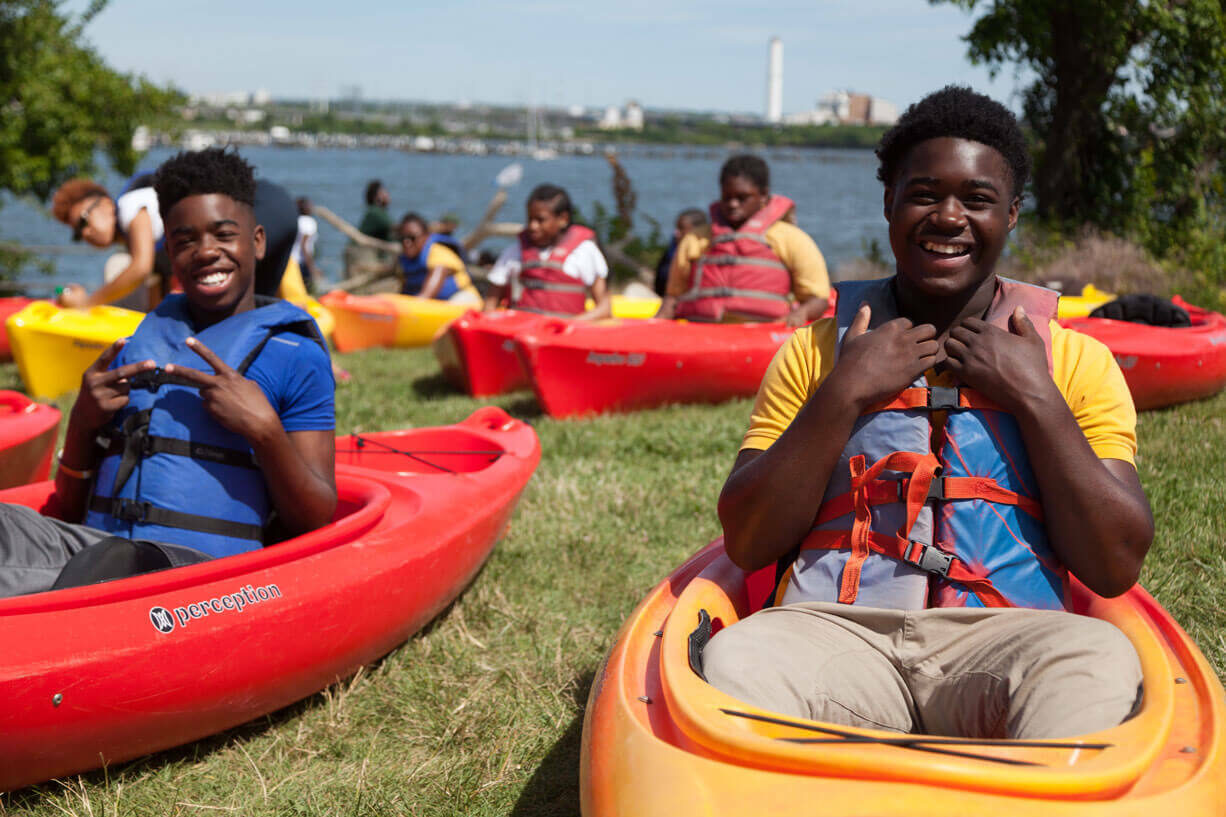
As the weather begins to warm, thoughts turn to outdoor activities. Fortunately, there are many ways to take classroom learning outdoors – sometimes in unexpected ways.

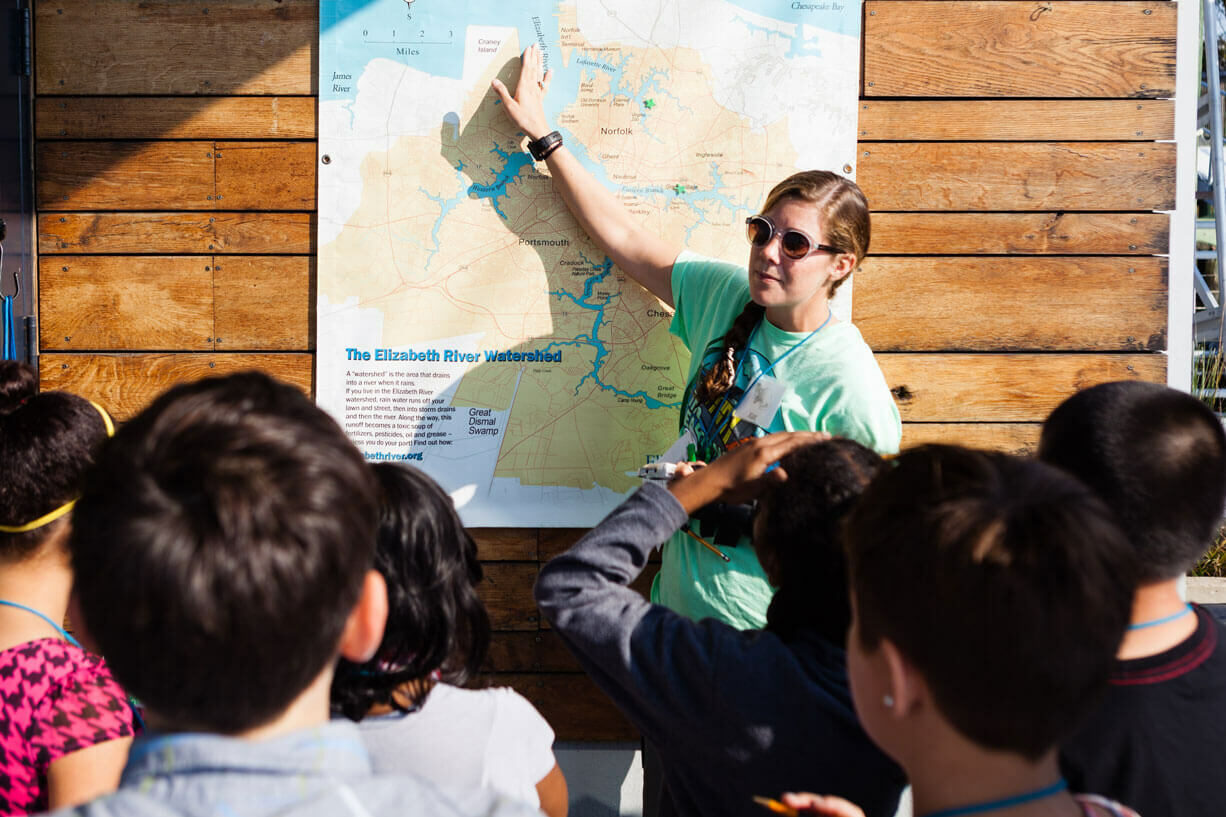
Join National Environmental Education Week (EE Week) for Greening STEM: Taking Technology Outdoors, April 14-20, 2013 and explore how technology can enhance environmental learning both inside and outside the classroom.  Hosted by the National Environmental Education Foundation, EE Week is the nation’s largest celebration of environmental education held each year the week before Earth Day and inspires environmental learning and stewardship.

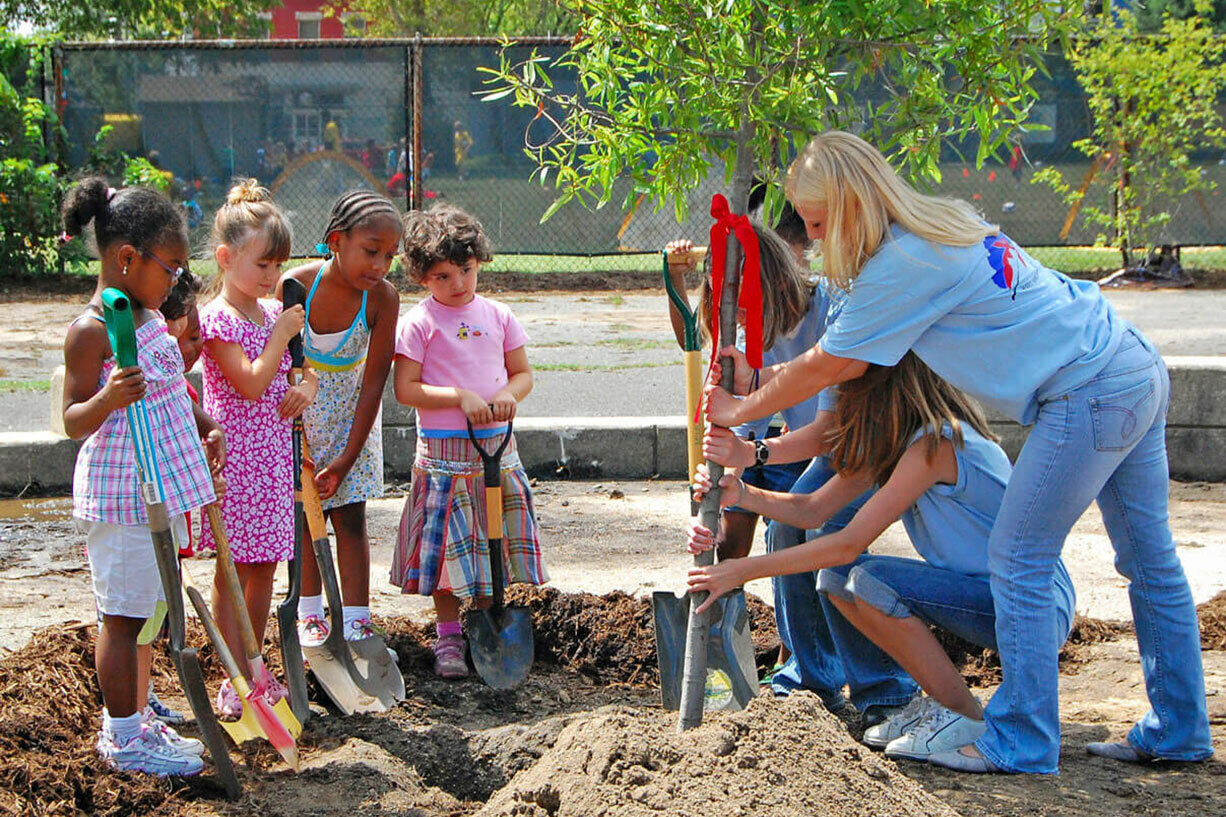
In 2012, EE Week kicked off a multi-year Greening STEM initiative on the important role the environment plays in engaging students in STEM learning and helping them solve 21st century challenges.  The environment provides a gateway to STEM learning through hands-on, real-world projects on topics like energy efficiency and resource conservation that incorporate all four pillars of STEM. For instance, David Munson, Education Director at Project Noah noted that digital tools and other technologies can draw students “into the landscape – into their communities – and can provide an important bridge between the familiarity of the digital world and the discoveries that wait for them in nature.”

Research indicates that 77% of teachers believe using technology in the classroom increases student motivation to learn, while 75% of 1,900 surveyed educators said students who spend regular time outdoors tend to be more creative and better problem-solvers.

Coming up for EE Week

Stay tuned for details about an upcoming EE Week Google+ Hangout which will provide teachers and students from around the country the opportunity to go behind the scenes with meteorologist Dan Satterfield for an interactive presentation on how cutting-edge technologies are being utilized to forecast and understand wild weather. This EE Week offering will be part of a series of biweekly Google+ Hangouts with scientists leading up to Google’s third annual Science Fair.

Educators around the country are encouraged to register free and explore how today’s technology can enhance environmental learning and develop 21st century skills in creativity, innovation, communication and collaboration.

Connect with EE Week on Facebook and Twitter to stay posted.

Sarah Kozicki is an Education Program Coordinator for National Environmental Education Week.

Green Strides Webinars: April Series

March 25th, 2013 by Sarah

The Green Strides Webinar Series provides school communities the tools to reduce their schools’ environmental impact and costs; improve health and wellness; and teach effective environmental literacy, including STEM, green careers, and civic engagement.>>> These are all the tools that help schools and districts move toward the aims of our U.S. Department of Education Green Ribbon Schools recognition award.  This April, the Green Strides Webinar Series will be conducted on:

The Three T’s of Reducing Lead in Drinking Water in Schools (EPA)
April 3, 2013 from 2:00 – 3:00 p.m.

Young children are at particular risk for lead exposure. To assist with implementation of programs and policies to reduce lead in drinking water at school and child care facilities, EPA uses the 3Ts concept: Training, Testing, Telling,  each of which is an important component of a successful lead reduction program. This webinar will cover how to implement a 3T program in your school or child care facility.

Register here!

21st Century Tools for Environmental Learning in the Community (NEEF & Green Teacher)
April 3, 2013 from 7:00 – 8:00 p.m.

Learn how to turn student engagement in media & technology tools into a powerful venue for learning. Get to know the Island Institute & their strategies for integrating & applying technology with community-based environmental education programs. Learn how to apply these strategies in your classroom to engage students in hands-on environmental learning through the application of 21st century skills and knowledge.

Register here!

Pathways to Green Jobs and Careers in Natural Resources (USDA)
April 10, 2013 from 4:00 – 5:00 p.m.

Are you prepared to enter into a meaningful green career? With record numbers of people out of work, the prospect of an emerging green economy is increasingly viewed as the light at end of a tunnel.  This webinar will feature high level participation from the USDA, experts in this emerging realm along with Green Team students who aspire to embrace Green jobs as a career pursuit.

Register here!

Greening STEM: Taking Technology Outdoors (NEEF & EPA)
April 16, 2013 from 4:00 – 5:00 p.m.

On this webinar, participants will explore how technology can enhance environmental learning both inside and outside the classroom. EE Week will highlight the growing opportunity to engage today’s students in learning about the environment with new technologies that enable scientific research and develop 21st century skills, including creativity, innovation, communication and collaboration.

Register here!

Water, Exploration, and the Future (NASA)
April 17, 2013 from 4:00 – 5:00 p.m.

Discover all the ways NASA is learning about water here on earth and in Space.

No registration necessary. Log on here!

GreenSchool and STEM (USFS & PLT)
April 27, 2013 from 4:00 – 5:00 p.m.

Whether you’re a teacher, administrator, parent or student Green Team member, this webinar will demonstrate how STEM can be seamlessly integrated into the school curriculum using the US Forest Service /Project Learning Tree GreenSchools! Investigations and grant program as a model for schools.

Register here!

For more information on the Green Strides Webinar Series, upcoming webinars, and past webinar recordings, please visit: http://www2.ed.gov/programs/green-ribbon-schools/webinar.html

Sarah Brzezinski works for the Chesapeake Research Consortium as the Chesapeake Bay Program's Fostering Stewardship and Education Workgroup Team Staffer. She also serves as the content manager of Bay Backpack.

What’s on Tap for EE Week 2013

March 7th, 2013 by Sarah Kozicki

Photo Credit: David Munson

Hosted by NEEF, EE Week is the nation’s largest celebration of environmental education held each year the week before Earth Day and inspires environmental learning and stewardship among K-12 students. The 2013 theme, Greening STEM: Taking Technology Outdoors, will explore how technology can enhance environmental learning both inside and outside the classroom

EE Week will highlight the growing opportunity to engage today’s students in learning about the environment with new technologies that enable scientific research and develop 21st century skills, including creativity, innovation, communication and collaboration.

Among EE Week’s offerings for K-12 educators this year are a series of webinars:

  • On March 13 at 7:00 p.m. ET, join National Geographic Education and Esri to explore tech tools that engage students in citizen science projects and connect them with their local communities.
  • Then on April 3 at 7:00 p.m. ET, join EE Week and Green Teacher to learn how the Island Institute is turning student engagement with technology tools and media into a powerful venue for learning about their environment.

Google+ Hangout

And stay tuned for more details about how teachers and students can go behind the scenes with a scientist who is utilizing cutting-edge technologies to support environmental work in an upcoming EE Week Google+ Hangout. This is slated to be part of a series of biweekly Google+ Hangouts with renowned scientists leading up to Google’s third annual Science Fair.

Register for EE Week now to take advantage of these learning opportunities. There is no cost to register and participate in EE Week.

In addition to webinars, educators who register for EE Week 2013 will be able to take advantage of:

  • A free educator toolkit including tech tools, educational resources and suggested activities for engaging students in Greening STEM learning outdoors.
  • Case studies of technology in action and the educators and programs using it to enhance environmental and STEM learning and achievement in core subject areas.
  • Discounts, giveaways and special offers from our partners on environmental education tools, resources and professional development.

Stay tuned as more offerings become available. Visit www.eeweek.org/greening_stem to learn more or connect with us on Facebook and Twitter.

Sarah Kozicki is an Education Program Coordinator for National Environmental Education Week.

Green Strides Webinars: March Series

February 28th, 2013 by Sarah

The Green Strides Webinar Series provides school communities the tools to reduce their schools’ environmental impact and costs; improve health and wellness; and teach effective environmental literacy, including STEM, green careers, and civic engagement.>>> These are all the tools that help schools and districts move toward the aims of our U.S. Department of Education Green Ribbon Schools recognition award.  This March, the Green Strides Webinar Series will be conducted on:

Integrated Pest Management in Schools: Protecting Children from Pests & Pesticides (EPA)
March 6, 2013 from 2:00 – 3:00 p.m.

Pests and pesticides pose risks to the nearly 60 million children and staff who spend considerable periods of time in our nation’s schools. EPA recommends that schools use an Integrated Pest Management approach to reduce exposure in schools. This webinar will describe basics of school IPM, the potential health, environmental and economic benefits, and what it takes to put IPM into practice.

Register here!

Food and Fitness (NASA)
March 13, 2013 from 4:00 – 5:00 p.m.

Many factors impact an astronaut’s ability to live and work in space. Study the efforts to improve nutrition and keep crew-members healthy. Learn about the relationship between nutrition and fitness. The activities examine techniques to make life long healthy meal and activity choices, such as determining the proper serving size, understanding food labels, and assessing proper nutritional and exercise choices.

No registration necessary. Log on here!

Taking Technology Outdoors: Geography Connections (NEEF)
March 13, 2013 from 7:00 – 8:00 p.m.

In this webinar, National Geographic Education will introduce FieldScope, mobile technologies and online communities and how they can be used for citizen science projects. The event will introduce storymaking with maps – how to make maps with existing data and how to collect data in the field for creating story maps.

Register here!

Radiation Exposure on Earth (NASA)
March 20, 2013 from 4:00 – 5:00 p.m.

This webinar features the first activity of NASA’s Radiation Challenge guide designed for middle school classroom – “Radiation Exposure on Earth.”  Discover how NASA is using radiation studies to help design long-duration spaceflight vehicles and how NASA’s space experiences are helping us here on Earth. Explore the use of sunscreen and SPF levels designed to protect us from the effects of solar UV radiation.

No registration necessary. Log on here!

For more information on the Green Strides Webinar Series, upcoming webinars, and past webinar recordings, please visit: http://www2.ed.gov/programs/green-ribbon-schools/webinar.html

Sarah Brzezinski works for the Chesapeake Research Consortium as the Chesapeake Bay Program's Fostering Stewardship and Education Workgroup Team Staffer. She also serves as the content manager of Bay Backpack.

Free Webinar on “Field Investigations and STEM” This Week!

March 26th, 2012 by Sarah
http://www.eeweek.org/webinars/field_investigations

Engage your students in outdoor learning about STEM subjects!

In 2012, National Environmental Education Week (EE Week) will be celebrated from April 15-21. The events are kicking off early this year, and this Wednesday, March 28th at 7:00 PM you can join in by participating in a free webinar about “Field Investigations and STEM.”

For this webinar, EE Week will be partnering with the Association of Fish & Wildlife Agencies (AFWA) and the Pacific Education Institute (PEI) to explore how the schoolyard or local public land can provide students with the opportunity to be scientists using the skills and knowledge of inquiry to collect real-world data.  During the webinar Margaret Tudor and Pat Otto from PEI will provide teachers with information and tools to engage students in STEM learning outside, utilizing nature as a laboratory, by planning, conducting, and evaluating a field investigation.

Webinar participation information will be sent to EE Week 2012 registrants via email. Registration is free and easy and connects you to a national network of educators dedicated to increasing the environmental knowledge of K-12 students.

For additional information on this event, please visit: http://www.eeweek.org/webinars/field_investigations

Sarah Brzezinski works for the Chesapeake Research Consortium as the Chesapeake Bay Program's Fostering Stewardship and Education Workgroup Team Staffer. She also serves as the content manager of Bay Backpack.

The STEM of Super Bowls: Teach About It!

February 6th, 2012 by Sarah

The Science of NFL Footbal was created by the NFL, NSF, and NBC Learn.

Are your students talking about the Super Bowl today? Did you know that you can use their enthusiasm about football to get them interested in Science, Technology, Math, and Engineering (STEM) fields? It’s true! There are plenty of resources available to help you use football as a tool for teaching STEM subjects.

In particular, The Science of NFL Football video series stands out as a great resource to help you teach about STEM content using one of America’s favorite pastimes. This informative series features 10 videos, each of which lasts about four to five minutes. Each video addresses a different topic, so you can decide if you want your students to learn about geometric shapes, Newton’s Laws of Motion, Kinematics, the Pythagorean Theorem, and more. Who would have thought that you can have former NFL quarterback Joey Harrington (and scientists and professors) talk to your students about vectors?

Lesson plans to accompany each of the videos are provided at http://www.lessonopoly.org/nfl. All of these resources are available for free online. These videos and lesson plans are a great way to get students who have not been traditionally interested in STEM subjects engaged, and can reinvigorate the interest of your top students.

There is also a wide variety of articles that can help you connect football to STEM subjects. Learning about these topics can help your students understand some of the cool STEM careers associated with the Super Bowl! This was the topic of our previous blog, The STEM of Super Bowls: Career Paths. You can also use these resources to talk to your students about some of the innovative technologies that have been used at Super Bowls:

Who knows? Maybe one of the students you inspire with football-related STEM lessons will grow-up to work on issues related to the health of the Chesapeake Bay watershed!

Are your students talking about the Super Bowl today? Did you know that you can use their enthusiasm about football to get them interested in Science, Technology, Math, and Engineering (STEM) fields? It’s true! There are plenty of resources available to help you use football as a tool for teaching STEM subjects.

In particular, The Science of NFL Football video series stands out as a great resource to help you teach about STEM content using one of America’s favorite pastimes. This informative series features 10 videos, each of which lasts about four to five minutes. Each video addresses a different topic, so you can decide if you want your students to learn about geometric shapes, Newton’s Laws of Motion, Kinematics, the Pythagorean Theorem, and more. Who would have thought that you can have former NFL quarterback Joey Harrington (and scientists and professors) talk to your students about vectors?

Lesson plans to accompany each of the videos are provided at http://www.lessonopoly.org/nfl. All of these resources are available for free online. These videos and lesson plans are a great way to get students who have not been traditionally interested in STEM subjects engaged, and can reinvigorate the interest of your top students.

There is also a wide variety of articles that can help you connect football to STEM subjects. Learning about these topics can help your students understand some of the cool STEM careers associated with the Super Bowl! This was the topic of our previous blog, The STEM of Super Bowls: Career Paths. You can also use these resources to talk to your students about some of the innovative technologies that have been used at Super Bowls:

· Engineers in the End Zone – This article about college football stars who are also studying engineering.

· Top 5 Ways Super Bowl 2012 Supports the Environment – Did you know that nearly 60 tons of aluminum cans, plastic bottles, cardboard and glass were recycled at the Indiana Convention Center & Lucas Oil Stadium in 2010? Learn more about Super Bowl XLVI’s green initiatives and share the information with your students!

· Engineers Help Detect Football Injuries – Learn about how engineers are working to design football helmets that not only protect an athlete’s head from injury, but also measure the force of any impacts to determine a player’s risk having of a concussion so medical attention can be promptly provided.

· Super Bowl Replay Technology Draws on Carnegie Mellon and Pittsburgh Supercomputing Center Expertise – Did you ever wonder about the technology that allows viewers to see a Super Bowl play as if time is frozen while a camera circles around the action? Learn more in this article.

· Going Deep: Future Technology in the NFL – This MSNBC article discusses some of the technology we could see in future NFL games. Maybe one of your students will be the person to invent it!

· Top 5 Technologies in NFL Stadiums – From enormous HDTVs to retractable grass, this article will inform your students about some of the cool technology that was used at Super Bowl XLIV.

Who knows? Maybe one of the students you inspire with football-related STEM lessons will grow-up to work on issues related to the health of the Chesapeake Bay watershed!

Sarah Brzezinski works for the Chesapeake Research Consortium as the Chesapeake Bay Program's Fostering Stewardship and Education Workgroup Team Staffer. She also serves as the content manager of Bay Backpack.

The STEM of Super Bowls: Career Paths

February 2nd, 2012 by Sarah

Get the students in your classroom interested in Science, Technology, Math, and Engineering (STEM) fields by talking about football! Image courtesy of http://sandersonsports.com/

Football is probably not what you think of when someone mentions the Chesapeake Bay.  Personally, my mind jumps to great blue heron, osprey, blue crabs, oysters, terrapin, and bay grasses. I got a degree in environmental science because my parents and teachers inspired me to be passionate about these things, but oysters and osprey may not be interesting to all of your students.  Finding a topic that inspires your students can be a challenge, and using that topic to develop an interest in Science, Technology, Engineering, and Math  (STEM) fields, such as environmental science, can be even harder.

The importance of STEM fields is frequently called out, but the United States educational achievements in these content areas are consistently ranked behind that of other countries.  In the 2006 Programme for International Student Assessment (PISA) comparison, American students ranked 25th out of 30 in math literacy and 21st out of 30 in science literacy among students from developed countries.  STEM fields are essential to the growth of our economy, and all of our students should be graduating literate in these subjects. We also need more students graduating with advanced degrees in these fields to continue our country’s tradition of innovation (and to continue working on issues related to the health of the Chesapeake Bay).

A great way to get your students interested in STEM fields is to frame the conversation and the lesson plans you use around something they are already genuinely interested in.  Do you think your students will be talking about the Super Bowl on Monday?  Inviting them to talk about it during class may be a bit of a taboo, but it is one you can break if you direct the conversation towards the types of professions it takes to pull-off a Super Bowl.  Someone had to invent the technology that is used to design helmets, half-time show pyrotechnics, high-definition video cameras, and the headsets coaches use to communicate.  Have your students brainstorm a list of STEM-related professions that are needed to pull such a big sporting event off.

If your students have doubts about STEM involvement in the Super Bowl, share this bit of information with them: to broadcast and produce the 2009 Super Bowl in Tampa, FL, NBC used 52 high-definition cameras, 45 vehicles (including control trucks, mobile units, office trailers and a horse trailer), 24 digital video replay sources, eight digital post-production facilities (five Avid suites and three Final Cut Pro suites), 20 hand-held cameras, five robotic cameras, two RF hand-held cameras, one “cable-cam” camera that was suspended above the field and more.  A crew of 200 people and more than 450 total production and engineering staff were working at the game (The Tech that Makes the Super Bowl Super).

STEM professionals are necessary for football to be played by athletes and enjoyed by viewers!

Be sure to check Bay Backpack’s blog on Monday; we will be featuring some lesson plans and resources that can help you Teach About the STEM of the Super Bowl!

Sarah Brzezinski works for the Chesapeake Research Consortium as the Chesapeake Bay Program's Fostering Stewardship and Education Workgroup Team Staffer. She also serves as the content manager of Bay Backpack.

Geocaching at Southern Guilford High School

January 30th, 2012 by Mark Case

Geocaching is a real-world, outdoor treasure hunting game in which participants use GPS-enabled devices to navigate to a specific set of GPS coordinates, and then search for the geocache (container) hidden at that location. This geocache was hidden in the center of a hollow tree!

“I use billion dollar technology to find Tupperware containers in the woods.”  I love that saying and it is so true!  I get to play with some of the most sophisticated technology on the planet and find my way in the woods, or park or even the city.  I am using a GPS, showing students how to use them, and having fun!

Most of my students have not spent more than an hour outside in the past week.  That includes the time walking from their house, to the bus, from the bus to school and back.  Geocaching gives me the opportunity to get students outdoors, using 21st century learning skills combining nature and technology.

On campus, I set up geocaching courses where students use GPS units to find clue sheets hidden in containers around campus.  They learn how to use the technology and how it relates to latitude, longitude, elevation and topography.   The PE department has followed this idea by setting up courses on campus property.  Instead of walking in an oval 5 times for a mile, students can use GPS devices to locate the 5 clip boards, answer a few questions, learn and get their exercise.

I offer students an opportunity to earn extra credit with geocaching.  They can find a minimum of 10 geocaches, place a geocache and prepare a report for grade recovery.  Parents, students and I meet before they embark on the activity.  Students check out a GPS unit (or use the APP on their phone) and sign a contract (deadlines and expectations).

One Saturday, I offered to meet parents and students at a local park with 10 active geocaches.  I taught how to navigate to the caches, proper logging, swapping swag and replacing for the next player.  Four families showed and told me this was the first ‘family event’ they have done in months.  Along the trail, we stopped and examined animal tracks, types of rocks, lichens, listened to bird songs, calculated water flow rates in a creek and estimated wind speed without technology.

What I have found is students are having fun.  When they have fun, they learn and do more.  They are contagious to other students and their families.  Students that get involved have increased their grades and interest in class (in most cases, all their classes).  Additionally one student has stopped his chronic absences.  He knows if he is not in class, he cannot check out the GPS on the weekend.

Last month, one student asked if he could make a career doing geocaching!  At first, I giggled to myself.  How…… then I thought…. “SOMEONE HAS TO DESIGN THOSE SATELLITES!!!” and told him yes.  We spent nearly ½ hour after school during learning lab brain storming how he could make money with this hobby.

To learn more about how geocaching can be used in the classroom, visit the educational forum on www.Geocaching.com. You can ask questions, post lessons and download lesson plans from other educators for free.

Mark Case is a high school science teacher at Southern Guilford High School in Greensboro, NC. Mark serves on the North Carolina Science Teacher Association board of directors as District 5 Director. He is an active Geocacher with over 3000 finds, 100 hides and is a moderator on the Geocaching.com education forum.

National Park Service “Views” the Chesapeake Bay with a New, Online Education Tool

March 14th, 2011 by Cindy

The Chesapeake Bay Bridge from Sandy Point, State Park. Photo courtesy of National Park Service, photographer Middleton Evans

The National Park Service (NPS) features the Chesapeake Bay for its latest edition of Views of the National Parks, an online educational resource. Views is a great resource for anyone looking to learn more about the Chesapeake Bay, and is a valuable tool teachers can use in their classrooms!

The Chesapeake edition of Views of the National Parks is a joint project of the National Park Service Chesapeake Bay Office in Annapolis, Maryland, and the NPS Natural Resource Stewardship & Science program in Fort Collins, Colorado. This resource provides readers with a background in the natural world of the Chesapeake, its geologic formation as an estuary and its diverse ecosystems and species, as well as an understanding of the human history and cultural environment of the Bay watershed. Chesapeake Views also describes how the Bay environment has changed over time and how individuals can become involved in restoring and protecting the Bay.

With such a wide range of topics covered, the Chesapeake edition of Views can be used by environmental science, earth science, geology, biology, history, and social studies teachers alike! Teachers can use Views as an education module by developing questions for their students to answer as they explore the sites content.  Views is also a great resource to send students to for independent research projects.

A “Visit” section highlights some of the many places to experience the Bay and to learn more.  This section can help teachers identify locations for possible Chesapeake Bay field trips. Numerous photographs, pop-up sidebar text, maps, a glossary, and links to additional resources are among a variety of teaching tools that are available on the website.

“Partners in the Chesapeake Bay Gateways and Watertrails Network, together with the Captain John Smith Chesapeake and Star-Spangled Banner National Historic Trails, offer educators, students, and visitors meaningful avenues for learning about the Chesapeake”, said John Maounis, NPS Chesapeake Bay superintendent. “Now, supplemented with the Chesapeake module of Views of the National Parks, citizens have the tools they need to better understand and participate in the protection of this vital resource.”

On the National Parks Views website students can explore many bay-related topics, including how the Chesapeake Bay was formed.

Cindy Chance is a Management Assistant for the National Park Service, Chesapeake Bay office. She can be contacted at cindy_chance@nps.gov or at 410-260-2492.