Help the Chesapeake this Earth Day

April 19th, 2010 by Karey
This rain garden collects water that drains off the roof of the building allowing the water to slowly sink back into the ground.

This rain garden collects water that drains off the roof of the building allowing the water to slowly sink back into the ground.


The 33rd annual Earth Day celebration will be held nationwide Thursday April 22, 2010! What can you and your classroom do to help the Chesapeake Bay?  You probably won’t have to look far on your school grounds to create a project.  Here are some ideas!

Collecting rainwater with rain barrels is a great way to help the environment and it also provides a source of free water.  Source: Flickr, Joebart

Collecting rainwater with rain barrels is a great way to help the environment and it also provides a source of free water. Source: Flickr, Joebart

Plant Rain Gardens, Trees, or Wildlife Habitats
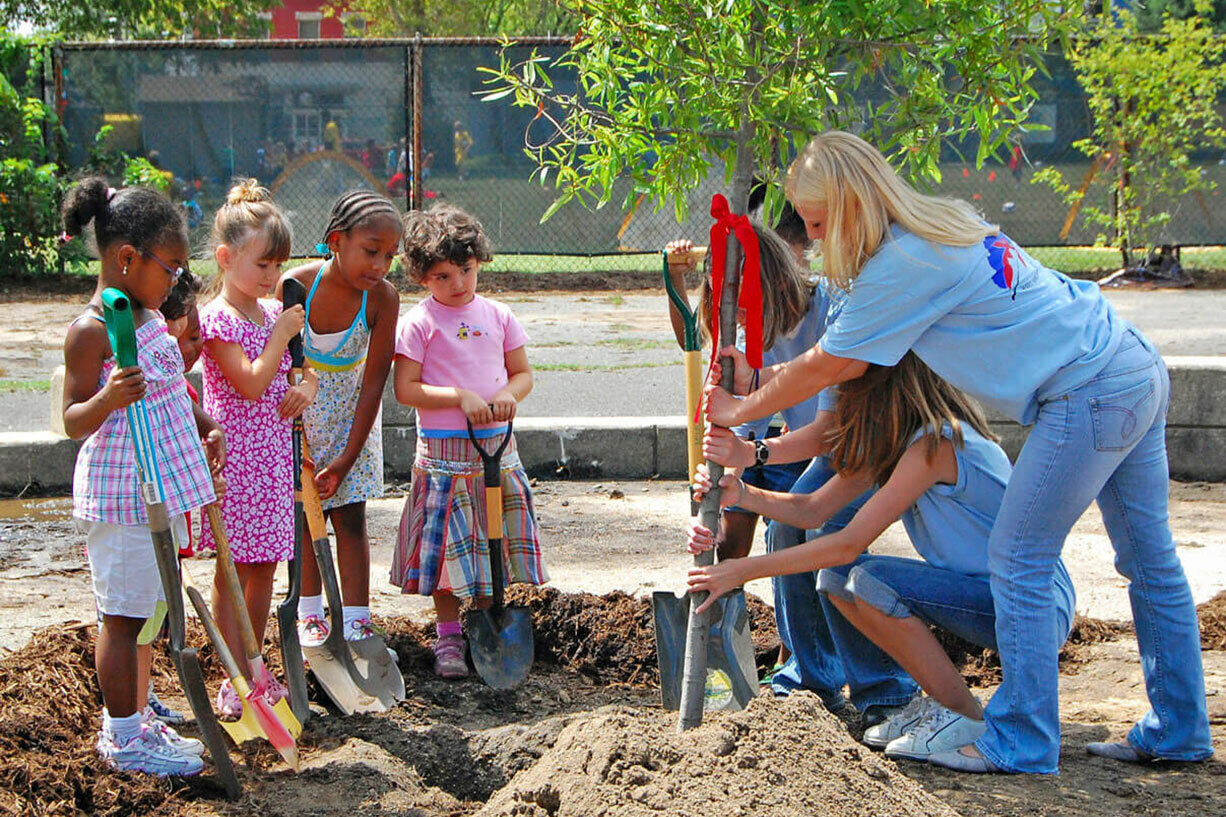
Plants serve as great buffers to prevent runoff, provide clean air, and can serve as homes for local wildlife which can be studied by students at a later date. Students can continue to care for these areas, creating a long-term learning experience for all ages.

A rain garden is full of native plants in a dug-out low-lying area, and collects runoff from roofs, sidewalks, and other hard surfaces. In the garden, this water can be absorbed instead of going straight into storm drains that lead to the Bay. Not only will this decrease polluted runoff, (the only source of pollution to the Bay that is growing) but it will increase available groundwater.

Planting native trees will prevent runoff and erosion, as well as provide a habitat for local birds and other wildlife. Native plants are well suited to the local environment, and will require less care than non-native species.

Both the rain garden and the native trees will provide habitats for local wildlife, but you could also have your local habitat become a certified National Wildlife Federation wildlife habitat. You will have to provide food, water, cover, and places to raise young. This will serve multiple purposes, including providing a perfect laboratory for students to observe local wildlife.

Install Rain Barrels

Rain barrels attach to buildings’ downspouts and collect rainwater from the roofs. This will serve two purposes on your school grounds – it will help prevent runoff from leaving grounds carrying nutrients, sediments, and chemicals to the Bay, plus it will provide “free” water
to use when taking care of the gardens, trees, and wildlife habitats you
just planted!

Work with your maintanence staff to create a "No-Mow Zone" in your schoolyard.  Source: Flickr, Orchid8

Work with your maintanence staff to create a "No-Mow Zone" in your schoolyard. Source: Flickr, Orchid8

Create a No-Mow Zone
Is there a stream, creek, or drainage ditch that runs through/near school property? In addition to planting trees as discussed above, you could have your school designate the areas around the water as a “Now-Mow Zone”. No-mow zones are areas that are allowed to naturally grow and that are not cut the way traditional lawns are maintained. This will allow grasses and shrubs to grow, and provide a habitat for local wildlife as well as preventing runoff, and decreasing the cost of gasoline for mowing this area. Over time, shrubs and trees will fill in this area.

Remember, if you are hosting a school-wide event, the best way to make an impact would be to lead by example. Recycling, composting uneaten lunches, and water conservation while planting are great ways to start! Encourage students to bring reusable bottles to carry their water in, instead of using a fresh plastic bottle each time.

Additional Resources:
Schoolyard Activities/Lessons – Bay Backpack
Earth Day Events – Chesapeake Bay Program
Educators Take Action – Earth Day Network

    Karey Harris is an Environmental Management Staffer with the Chesapeake Research Consortium.

    Become an Oyster Gardener

    January 10th, 2010 by Krissy
    After tending their oyster garden all school year, these Virginia students released their oysters into the river.

    After tending their oyster garden all school year, these Virginia students released their oysters into the river.

    Tending an oyster garden is a great way to get your students actively involved in efforts to restore the Chesapeake Bay. The Eastern Oyster is one of the most important species in the Chesapeake Bay because of its ability to filter water. One adult oyster can filter up to 50 gallons of water a day. But because of over harvesting and disease the oyster population is at 1% of its historic level. By becoming an oyster gardener your class can help boost the oyster population and make the waters of the Chesapeake a little cleaner.

    Here’s how you can participate. Your class can construct oyster cages out of wire mesh or PVC piping. The cages are then filled with baby oysters called ‘spat’ that you will care for over the next year. Oyster cages can be hung from a pier or piling close to your school. During the year your students will have to care for your oyster cages, cleaning the muck off of them weekly. Once your oysters mature and grow they will be collected and planted in a sanctuary reef.

    You can integrate math, science and writing skills into an oyster gardening project by measuring the growth of your oysters over the school year and having each student keep an observation journal recording any other critters you find living in the oyster cages. You can also teach your students about the historic oyster catch through activities such as Oysters and a Clear Bay.

    To find an oyster gardening program in your area visit Marylanders Grow Oysters, the Chesapeake Bay Foundation’s Oyster Program or Virginia Oyster Gardening Program.

    Additional Resources:
    Oyster Gardening Guide (pdf.)

    Krissy Hopkins is part of the Chesapeake Bay Program's Fostering Stewardship Team and Education Workgroup.