Paddling the Potomac: A MWEE to Remember

December 6th, 2010 by Page

Students on the "Paddling the Potomac" trip get the hang of paddling their canoes from one stop to the next. Photo courtesy of Page Hutchinson.

The morning mist rises above the river while a great blue heron leads the way. Besides the occasional cry of a Kingfisher, the only sound is of many paddles dipping in and out of the water. I know it won’t stay this blessedly peaceful and quiet for long once the 19 eighth graders find their rhythm and wake to the day.

This is our third morning of paddling on the Potomac River after spending the night camping in one of the many sites along the C&O Canal. Some of these children have never camped or canoed and are finally finding their daily stride. Today we made it onto the river in record time after requiring that the tents get packed before breakfast…good motivation!

Many years ago, Judy Cutright and I were  both teachers at J.P. Burley Middle School in Albemarle County. We developed this fall trip we call “Paddling the Potomac” in conjunction with The Mountain Institute in Spruce Knob, W. Va. Every year, we’ve tweaked the trip just a bit to make it better than the previous year.

On the first day, we meet TMI staff at Little Orleans on the Maryland side of the river. The students learn how to pack and seal a dry bag since we carry all our gear in the canoes with us. Usually they arrive with way more than they need and we have to convince them that their long underwear is more important than their favorite stuffed animal brought along for comfort.

Next is safety and paddling instruction. It may seem crazy, but yes, we takechildren on the river who have never paddled a canoe. The first day is always a little frenetic with canoes zigzagging back and forth across the river, heading the wrong direction or going in circles, but we coach them along and they finally get it. The shallowness of the river lessens any danger and we all wear life vests.

Students navigate to their next stopping point along the Potomac River. Photo courtesy of Page Hutchinson.

TMI provides one land guide who sees us off in the morning and then drives to our daily stopping point to mark it with hot pink plastic flagging ribbon easily seen from the river. Often, the TMI guide has to hike or ride a bike into the camp site since not all of them are easily accessible to a parking area. After several years of experimenting, we’ve finally worked out the distance between stopping points well enough that we land before dark.

We haul the gear, both personal and group, out of the canoes and pass it up to the campsite “bucket brigade” style. Due to erosion, most of our landing sites are steep and not conducive to individuals running back and forth. This teaches our students two great lessons: teamwork and erosion.

Trip participants pass supplies and gear along an assembly line from the canoes to camp for the night. Photo courtesy of Page Hutchinson.

Next is dividing into cook crew and tent crew. Every evening a different small group of students has the opportunity to cook dinner on portable camping stoves for the rest of the group, which is another first for virtually all the students. The rest of the students set up tents.

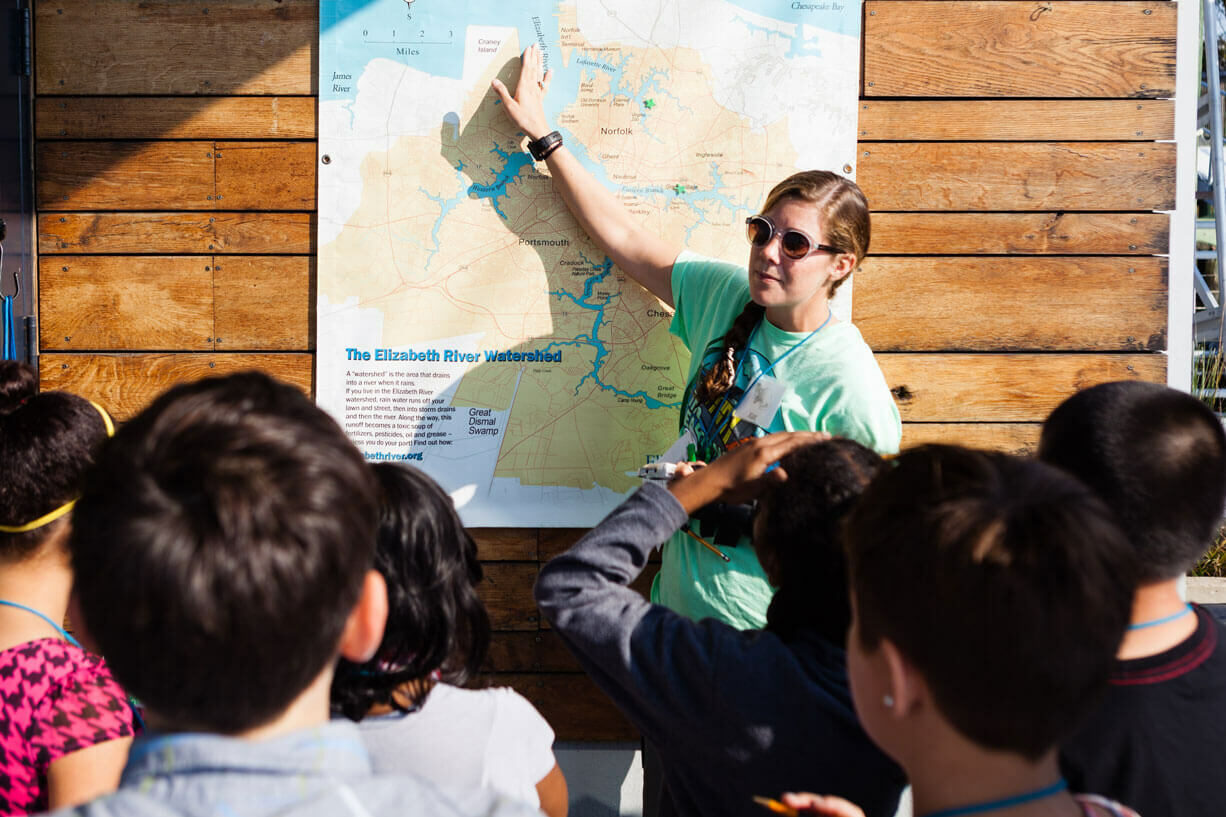
Countless opportunities offer themselves up for watershed instruction: erosion, algal blooms, land use, tributaries, habitats, and so forth. We can pretend we are traveling water molecules, and history and the role the river has played rounds out the experience.

The second day we pull out at Hancock, Md. to walk the C&O Canal, read the historical plaques, study the locks and peruse the museum. Most fun are the old film clips of the canal in use.

The group poses for a photo at Fort Frederick. Photo courtesy of Page Hutchinson.

The third day we land at Fort Frederick and enjoy a leisurely afternoon learning about life in the fort and its many uses over the years. Best of all is a visit to the store for a soda, ice cream or candy. It’s been three days of no junk food, after all.

Our fourth and final day on the river is a short one, only a couple of miles. We pull out at McCoy’s Ferry, unload, and rack the canoes. Next stop: Antietam Battlefield by school bus.

This last night together, we’ve made camp at the Harper’s Ferry KOA for the express purpose of taking showers. Unpacking dry bags and getting showers is interspersed with setting up camp and starting a special celebratory meal of lasagna made in two Dutch ovens. The evening ends with us around the campfire delighting in s’mores followed by a talent show.

"Paddling the Potomac" is a Meaningful Watershed Educational Experience none of the participants will be soon to forget. Photo courtesy of Page Hutchinson.

The final day of the trip, Friday, takes us to historical Harper’s Ferry at the confluence of the Shenandoah and Potomac Rivers, two rivers that have determined the fate of Harper’s Ferry. It is here we say goodbye to our beloved TMI staff who have to head back to Spruce Knob and deal with wet tents, mats, stacks of muddy dry bags, cooking gear, leftover food and the like. Living together as such a close community even for only five days makes this a heart-wrenching affair.

After a tour and some free time, we load up and head home to greet parents who can’t quite believe what they’ve just let their children do. Occasionally, I run into former trip participants and they never fail to mention it. “Remember when….”

It’s those moments that make it all worth it for the kids and for me – never mind four days of canoeing rather than being in the classroom!

Page Hutchinson is the MWEE Grant Coordinator for the Virginia Office of Environmental Education.

Take a “Voyage of Rediscovery” in your Backyard River

October 25th, 2010 by Adam

Students take an excursion in a canoe with the Voyages of Rediscovery program. Photo source: Adam Wicks-Arshack

It is no secret that the key to restoring the Chesapeake Bay begins with restoring the local waterways that lead to it. And it is unlikely that people who have no connection to those local waterways will feel compelled to work to make them healthier. So what better way to establish a connection with those rivers, especially at a young age so that the connection will be long-lasting, than to get out on the water and see it for yourself? One program has done just that in Washington state, and you can do it right here too.

“Voyages of Rediscovery” Program Director and Wilderness Guide Adam Wicks-Arshack tells us how.

***

“Voyages of Rediscovery” has facilitated educational expeditions on the rivers and waterways of Washington State since the spring of 2009. Using 30-foot voyager canoes as a medium for education, “Voyages of Rediscovery” gives students a new-found connection to their backyard rivers.

“Voyages of Rediscovery” employs a flexible program that can be catered to the needs of educational institutions, outreach groups, and community development groups. Through hands-on paddle time, our goal is to mesh the romance of historical expeditionary travel and an environmental education curriculum suited to your educational needs.

As a program, we run river-based environmental education trips in our fleet of 30-foot voyager canoes. Each canoe holds up to 12 students, a teacher, and a guide in the back. This arrangement allows the educator to lecture to his or her students and also allows the guide to share his or her knowledge of rivers while out on the expedition.

While we allow for ample study and activity time both on and off the boat, the majority of the learning comes from paddling side-by-side with classmates. The expedition really facilitates the development of teamwork and leadership skills for the students.

A guide teaches about animal tracks on a Voyage of Rediscovery. Photo source: Adam Wicks-Arshack

Over the past year Voyages of Rediscovery has completed 15 educational canoe trips with more than 300 students on the waterways of Washington State. The first educational expedition was on the Upper Columbia River at Lake Roosevelt, a three-day, two-night trip for a leadership-based class from the Evergreen State College.

“Voyages of Rediscovery” has also facilitated several trips for the Havermill Medicine Wheel Academy, an alternative high school for “at-risk” native youth in Spokane, Wash. On the west side of the state, we also offer trips on the Nisqually River, Skagit River, and the Puget Sound.

Although we are based on the complete other side of the country, if enough people show interest in participating in a river or Chesapeake Bay-based educational expedition in your area, we can make that happen.

In 2011 we will be driving across the country with our canoes and guides, facilitating canoe trips on “backyard” rivers across the nation. That can easily include one of your rivers, so just let us know!

If you would like to get more information on how to set up a backyard river expedition with Voyages of Rediscovery, just send an e-mail to info@voyagesofrediscovery.com.

Additional Resources
Voyages of Rediscovery
The Nisqually Watershed: a Uniquely Protected Area – Voyages of Rediscovery
Canoe, kayak and boat field studies – Bay Backpack
Exploring by Canoe – Abbott’s Mill Nature Center

Adam Wicks-Arshack is the program director and a wilderness guide with Voyages of Rediscovery in Washington State.

Follow Captain John Smith’s Footsteps

January 15th, 2010 by Krissy
Paddlers on the upper Patuxent River. Photo Credit: IAN Jane Thomas

Paddlers on the upper Patuxent River. Photo Credit: IAN Jane Thomas

Take your students on a journey of discovery, following in the footsteps of legendary explorer Captain John Smith. During Smith’s three years in Virginia, from 1607-1609, he navigated thousand of miles through the Chesapeake’s Rivers.

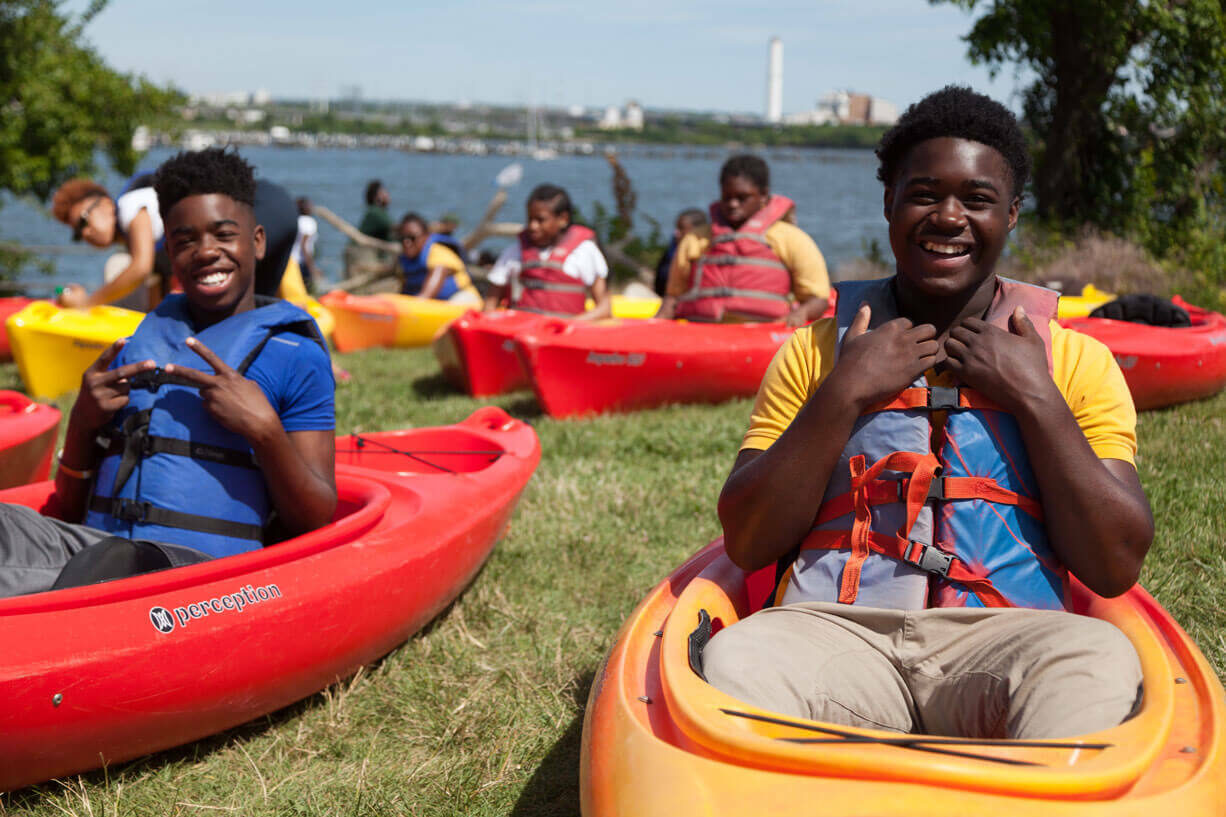
You and your class can recreate a small part of Smith’s Voyage by paddling or kayaking along the Captain John Smith Chesapeake National Historic Trail. The trail is a great way to get your students outside to learn the history and meaning behind Smith’s journey. Learn about Native Americans, including the tale of Pocahontas, and settlers’ encounters with them. Or visit the bay’s bountiful diversity of plants and life and learn how the environment has changed over time.

Begin charting your course NOW!

Additional Resources:
Chesapeake Now and Then – National Geographic

Filed under: Field Studies
Tags: , ,
Krissy Hopkins is a former Chesapeake Bay Program Staffer and is currently pursuing her PhD in geology at the University of Pittsburgh.