2012 Environmental Education Week Photo Blog Contest

May 28th, 2012 by Sarah Kozicki

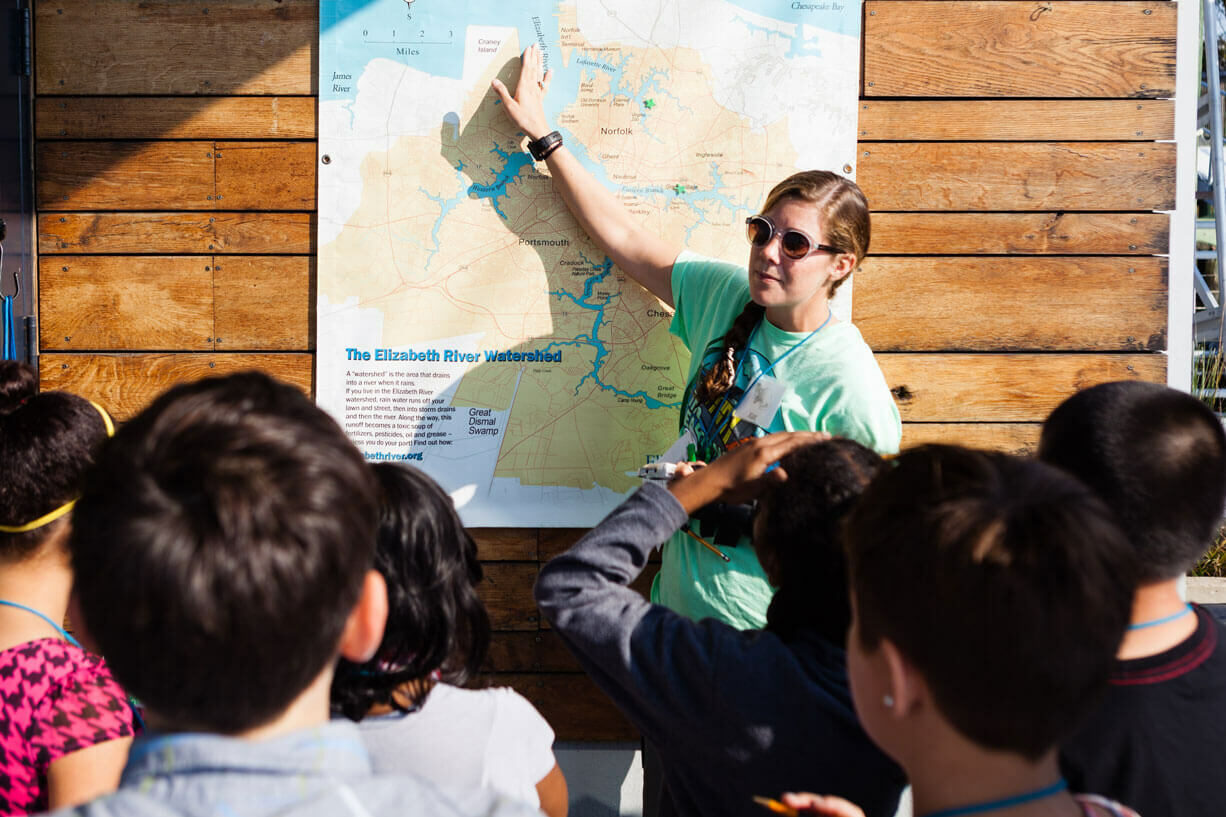
These students learned about the health of a local stream by examining macroinvertebrates. What activities did your students do during National EE Week?

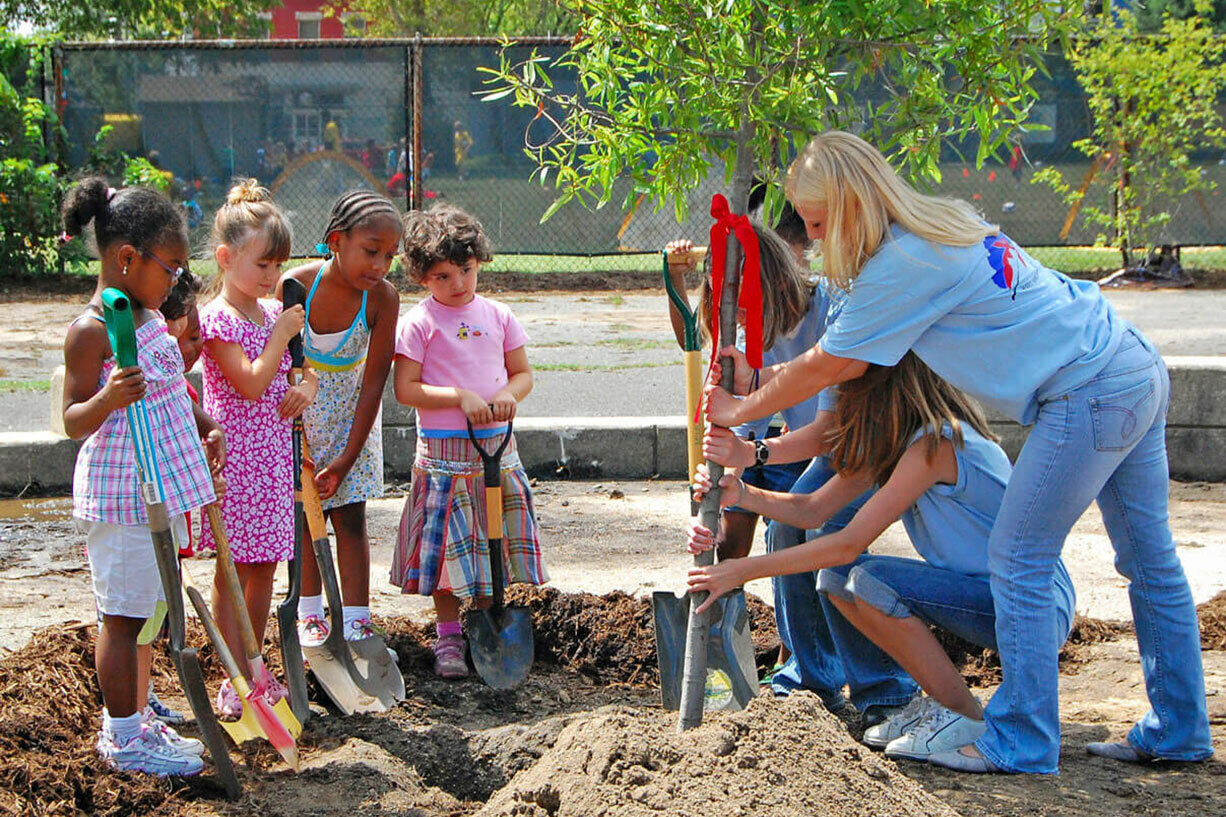
Do you have an inspiring story and photo of how you and your school or organization are engaging students in environmental education? National Environmental Education Week wants to hear about it! Simply upload your photos and stories to the EE Week Photo Blog.

The 2012 EE Week Photo Blog Contest – which will end on May 31 – is open to individuals affiliated with a school or organization providing K-12 educational programs. Photo Blog Contest applicants must be 18 years of age or older, have a valid email address and be residents of the United States. Please read the complete contest rules before entering.

Each photo blog entry must include a photograph and accompanying blog text no longer than 1,500 characters that clearly describes the environmental education activity shown in the photo. Release forms are required for each identifiable person in a photo. Entries will be judged on the quality of the photo and blog text, visual appeal and the student learning that took place as a result of the environmental education efforts depicted in the blog.

First, second and third place winners will receive a digital camera and be featured on EE Week.org.

Sarah Kozicki is an Education Program Coordinator for National Environmental Education Week.

Teaching and Learning in a Green School: Integrating Environmental Stewardship into the Curriculum

May 21st, 2012 by Jeanne Gemmell

Our latest School Spotlight, Sidwell Friends School, was recently recognized in the first round of the U.S. Department of Education Green Ribbon Schools Program. The middle school building features a reclaimed wood exterior and passive solar strategies that utilize sunshades.

As in many schools, 8th grade students at Sidwell Friends School take an Environmental Science course.  The goal of the course is for students to learn the biological, physical, and ecological concepts required to understand the significance of four environmental issues (biodiversity loss, global climate change, water stress, and human population growth).  The students also examine alternative solutions for resolving and/or preventing these issues, both individually and collectively.  At the conclusion of the course, students write a personal code of environmental ethics based upon their understandings of the issues, and place it in a manila envelope to be reopened when they are graduating seniors.

Significantly aiding in the teaching-learning process of this course is the Sidwell Friends Middle School building.  In September 2006, our Middle School faculty and students returned to a newly renovated building with an addition that almost doubled the size of the original 50-year-old building.   The new building became the first K-12 building in the world to receive LEED (Leadership in Energy and Environmental Design) Platinum rating from the U. S. Green Building Council, and the first LEED Platinum building of any type in the District of Columbia.  The building was designed and constructed to be as environmentally progressive as possible, and includes the following features:

  • An energy efficient and passive solar design that includes:  lights that are controlled by occupancy sensors; photocells that automatically adjust the level of artificial lighting according to the amount of daylight available; a roof that exceeds the thermal property requirements of standard building design by 155% and walls that exceed the same requirements by a factor of three; windows that are twice as insulating as energy standard properties; a central air system which takes advantage of an “economizer” operation to eliminate mechanical cooling by bringing in fresh air when outside air temperatures are appropriate; and solar shades that have been erected in key solar orientations
  • A green roof which reduces the “urban heat island effect” preventing the building from heating up and reducing demand for air conditioning
  • A constructed wetland which treats waste water through a natural vegetative process without having to go to a municipal sewage plant.

The Environmental Science course begins by ensuring that students gain a thorough understanding of the Middle School green features- those that conserve energy, eliminate storm water runoff, reduce water pollution, use renewable and recycled materials, and provide both a healthy environment inside the building, and a wildlife-friendly natural habitat outside.  The remainder of the course is designed to provide clarity regarding the School’s decision to finance and construct the Middle School as a “living habitat” in which students could personally experience the interdependent systems necessary to operate a built space in an environmentally sensitive and sustainable way.

Our Middle School facility provides an inspiring forum for our students to explore and debate the complex scientific, economic, ecological, and political realities that must be balanced in order for a society to meet its full range of needs for the present without undermining the ability of future generations to do the same.  This broad conception of sustainability, with its implicit compassion and concern for the well-being of all living things, resonates deeply with core Quaker values of simplicity of living, service to others, and environmental stewardship.  We believe the introduction of our LEED Platinum Middle School, and the subsequent attention to wise environmental practices in the operations and facilities throughout the school, have laid the foundation for a school-wide commitment to the principles of sustainability and global interdependence.

The Middle School building and the school’s underlying values have inspired a variety of curricular and co-curricular activities.  Presented below are some examples of innovative activities that Sidwell teachers have used to engage students in environmental education, while also preparing them to be “green carriers” of the future.  Working with the manager of the school web site, students wrote and recorded an on-line tour of the school’s platinum-rated building, with the hope that this would make it easier for others to learn about green architecture, and perhaps inspire some to construct their own green building.  To date, over 26,000 people have visited the site.  Students also designed the art work and accompanying text for a host of beautiful signs, placed in designated areas of the building, which interpret its many green features for visitors.  Roughly a third of the 8th grade students are trained every year as building tour guides.  These students are then able to competently explain the School’s green elements, from the rooftop gardens, solar chimneys, and photovoltaic systems, to the constructed wetlands and bio-pond; and, of course, to the labs, classrooms and art facilities in between.  Over 10,000 students, architects, and environmentally-concerned citizens have taken the guided tours of our school facility.

Sidwell Friends had three mutually supported objectives in designing the Middle School building: to create an aesthetically beautiful structure; to construct an environmentally high-performing building; and to provide a wonderful space for exceptional teaching and learning.  We feel our Middle School has successfully achieved all three of these goals.

Funding Fun: Summer 2012 Environmental Education Grants

May 14th, 2012 by Sarah

Harrisonburg City Public Schools (VA) incorporates local strawberries, ground beef for spaghetti sauce, and wheat flour for homemade rolls in their school meal programs. Image courtesy of the USDA.

As this school year winds down, deadlines to support end-of-year projects and environmental education activities for the next school year are coming up!  With classes to teach, final grades due soon, and classrooms to clean-up, this is a very busy time of year for educators.  To save you some time and to help support your Chesapeake Bay watershed, environmental and outdoor education-related activities and projects, we here at Bay Backpack have assembled a list of grants with application deadlines in June, July and August. Check them out below, and good luck with your applications!

Farm to School Program Grants

The USDA Food & Nutrition Service is implementing a Farm to School program in order to assist eligible entities, through grants and technical assistance, in implementing farm to school programs that improve access to local foods in eligible schools. Planning grants are expected to range from $20,000 – $45,000 and represent approximately 25 percent of the total awards. Implementation grants are expected to range from $65,000 – $100,000 and represent approximately 75 percent of the total awards. For both types of grants, the applicant must provide at least 25 percent of the costs of the grant project. To assist applicants, a webinar for Implementation grants will be conducted on May 15th at 3:00 pm EST and a webinar for Planning grants will be conducted on May 17th at 1:00 pm EST.  Letters of Intent (suggested) are due May 18, 2012 and proposals are due on June 15, 2012.

Learning & Leadership Grants

The NEA Foundation’s Learning & Leadership grants support public school teachers, public education support professionals, and/or faculty and staff in public institutions of higher education for one of the following two purposes: (1) Grants to individuals fund participation in high-quality professional development experiences, such as summer institutes or action research; or (2) Grants to groups fund collegial study, including study groups, action research, lesson study, or mentoring experiences for faculty or staff new to an assignment. All professional development must improve practice, curriculum, and student achievement. Applications are due by June 1, 2012.

Student Achievement Grants

The NEA Foundation provides grants to improve the academic achievement of students in U.S. public schools and public higher education institutions in any subject area(s). The proposed work should engage students in critical thinking and problem solving that deepen their knowledge of standards-based subject matter. The work should also improve students’ habits of inquiry, self-directed learning, and critical reflection. Grant requests can be submitted for $2,000 and $5,000. Applications are due by June 1, 2012.

Mini Grants for K-12 Environmental Education (Maryland and Washington, DC Only)

The Chesapeake Bay Trust’s Mini Grant program for K-12 Environmental Education is currently open! Through this grant program, CBT seeks to increase student awareness and involvement in the restoration and protection of the Chesapeake Bay and its local streams and rivers. Grant requests can be made for up to $5,000 for funding Watershed Education Experiences and Program, Service Learning and Action Projects, or Professional Development Workshops and Curriculum.  Applications for the first grant cycle are due by 5 p.m. on June 8, 2012. Applications for the second grant cycle are due by 5 p.m. on August 10, 2012.

Toshiba Grants for Grades 6-12

Do you teach 6-12 science or math? Do you have a wish list of instructional equipment that will make learning more exciting for your students? If the answer is yes to these questions, Toshiba America Foundation would like to hear from you. Grade 6-12 grant applications for $5,000 or less are accepted on a rolling basis, throughout the calendar year. Grants requests of more than $5,000 are reviewed twice a year. Applications for grants of more than $5,000 are due August 1, 2012 and February 1, 2013.

Target Field Trip Grants

Learning opportunities extend far beyond the classroom. But schools are finding it more and more difficult to bring students to museums, historical sites and cultural organizations. Field Trip Grants help give children these unique, firsthand learning experiences. As part of the program, each Target store will award three Target Field Trip Grants to K—12 schools nationwide—enabling one in 25 schools throughout the U.S. to send a classroom on a field trip. Each grant is valued up to $700. The Application Cycle opens on August 1, 2012.

Filed under: Funding
Tags: ,
Sarah Brzezinski works for the Chesapeake Research Consortium as the Chesapeake Bay Program's Fostering Stewardship and Education Workgroup Team Staffer. She also serves as the content manager of Bay Backpack.

May is American Wetlands Month!

May 7th, 2012 by Sarah

Sunset over the marsh on Tangier Island.

A marsh and eroding island near Hoopers Island, Maryland

This May marks the 21st anniversary of American Wetlands Month! Wetlands are the transitional areas between land and water that are defined based on their soil and vegetation type. All wetlands are dominated by hydrophytes, which are plants that are adapted for life in wet soils. Wetlands also have hydric soils, which are soils that are periodically saturated or flooded.

Did you know that two major groups of wetlands are found in the Chesapeake Bay watershed? It’s true! In this region, we have estuarine and palustrine wetlands. Estuarine wetlands are tidally-flooded and range in salinity from fresh to salt water. Estuarine wetlands include the marshes found mainly along the shore of the Chesapeake Bay and tidal portions of rivers. Palustrine (non-tidal) wetlands are freshwater bogs, marshes, and swamps bordering streams and rivers, filling isolated depressions and fringing lakes and ponds.

Wetlands provide many significant benefits for fish, wildlife, and people.  Not only do they provide important habitat for fish and wildlife, their unique natural characteristics include floodwater and stormwater storage, coastal protection, and increased water storage and supply. Wetlands can also help protect and improve water quality, an important factor in Chesapeake Bay restoration efforts.

American Wetlands Month is a time to celebrate the important role wetlands play in our Nation’s ecological, environmental, and socio-economic health.  It is also a great time to inspire a better understanding of these vitally important ecosystems.  Bay Backpack’s Teacher Resource page includes Wetlands as a “keyword” and provides a wide variety of lesson plans and activities that you can use in your classroom to participate in American Wetlands Month.  Here are some featured resources that can help you plan your wetland-related educational activities:

  • American Wetlands Month website – This EPA website provides some great information about why we celebrate American Wetlands Month, including the history of American Wetlands Month, 2012 events, and information about wetlands.
  • Chesapeake Bay Program Field Guide – Wetlands and Marshes – Do you want your students to learn about some of the plants and animals that live in wetlands? This extensive, online recourse was created and is managed by Chesapeake Bay Program. It is a great tool, and is searchable by habitat or critter!
  • The Fragile Fringe – This free USGS website acts as a guide for teaching about coastal wetlands. The information and activities that are provided can be revised to accommodate different learning levels of students.
  • Why Teach About Wetlands? – This Bay Backpack blog will fill you in! It provides some basic information on wetlands in the Chesapeake Bay, and information on why and how you can teach about them.
  • WOW the Wonder of Wetlands – This instruction guide for educators provides a wealth of curricular materials to help you teach about wetlands.  It has been recommended by the National Science Teacher’s Association, and is available for purchase on Environmental Concerns website,
  • Teaching about Wetlands Flyer – The EPA produced this flyer to briefly explain why wetlands are important, why you should teach about them, and how you can teach about them.
Sarah Brzezinski works for the Chesapeake Research Consortium as the Chesapeake Bay Program's Fostering Stewardship and Education Workgroup Team Staffer. She also serves as the content manager of Bay Backpack.