Ease back into the classroom – or out of it – with field studies

August 30th, 2010 by Lindsay

Labor Day is just a week away, and with it comes the traditional end of summer for many people. Once the cookouts and pool parties are over, most children will be back in school for the year, if they are not already. It can be just as difficult for teachers to get back into the swing of the school year as it is for the students, so there are a few ways to ease both yourself and your students into it.

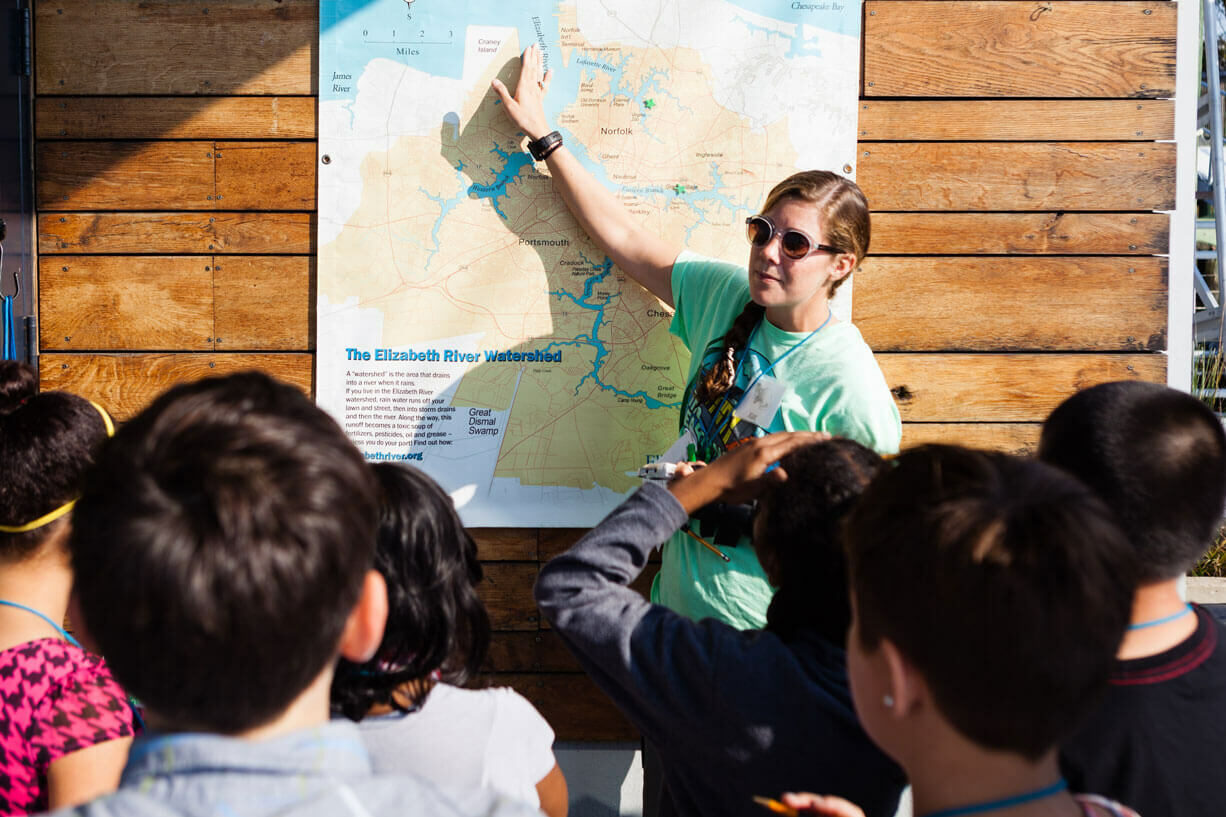
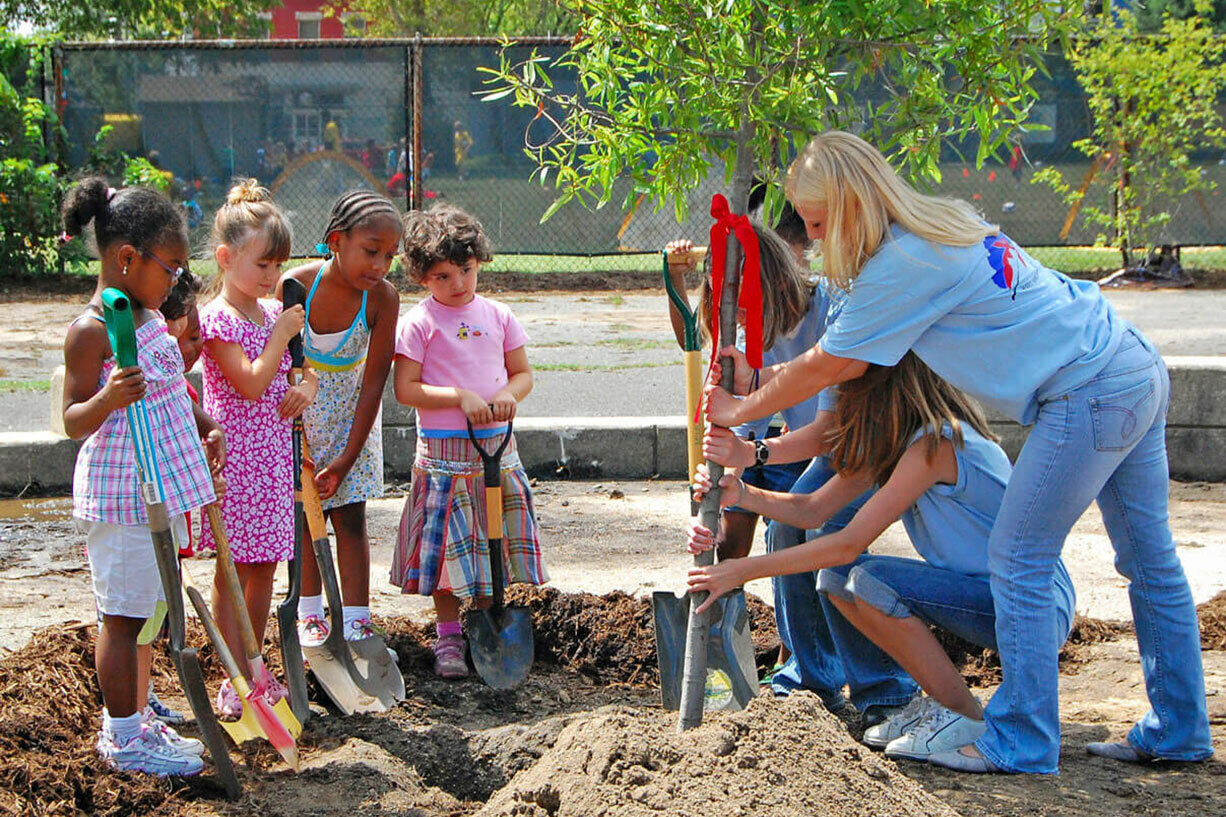
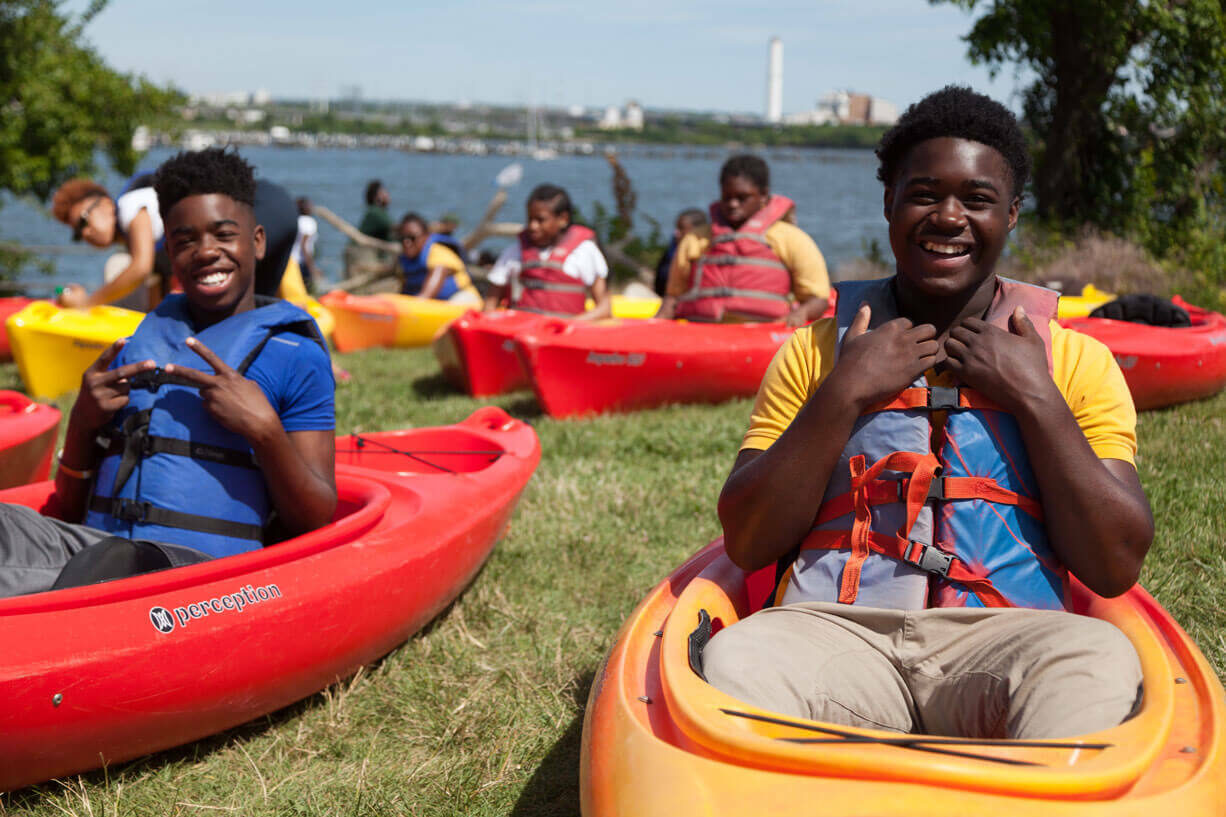
It’s likely that your minds, and your students’, are still on the fun you had over the summer, out on the water or enjoying the outdoors in other ways. So why not think about the fun things you can do outside of the classroom this year with a field study?

Photo credit: Virginia State Parks, First graders enjoy "A Stroll in Nature" presented by a Virginia State Park ranger.

There is information for more than 300 field studies in the Chesapeake Bay watershed available on Bay Backpack. From stream water quality monitoring to restoration activities, lab visits and wildlife tours, there is something available for all age groups to get a Meaningful Watershed Educational Experience (MWEE).

The Irvine Center in Owings Mills, Md. has information about its 2010-2011 educational programs available now here. The Center provides 10 options for field experiences for all education levels.

If you can’t get approval for a field study or it is too difficult to take your students out of the classroom, be sure to check about in-classroom opportunities as well. The Irvine Center, for example, offers Nature in the Classroom programs that might be a perfect fit in December and January during the cold winter months where getting outside can be especially difficult.

You can also schedule in-classroom presentations to students of all ages by staff currently working at the Chesapeake Bay Program. If you are interested and live in the greater DC or Baltimore areas, please contact Kristin Foringer or Lindsay Eney.

Start talking about field trips you are planning for this year now and your students will be motivated to keep going with that light at the end (or middle!) or the tunnel! Create a list of options for field studies that go along with your curriculum and then ask your students for input on where they would like to go. Getting your students involved in every aspect of the MWEE will help them realize how much of a difference they can really make!

Filed under: Field Studies
Tags:
Lindsay Eney is the Communications Staffer at the Chesapeake Bay Program.

One Goodbye, Two Hellos

August 23rd, 2010 by Krissy

Say hello to Kristin (left) and Lindsay (right), the new contributers to Bay Backpack!

The time has come to pass the torch to not one, but two new Bay Backpackers. I am leaving my post as manager of the Bay Backpack site to pursue a graduate degree in my hometown at the University of Pittsburgh. So while I have my head in the books, these two feisty women will take over the helm.

So have no fear! I leave all our faithful supporters in the very competent hands of Lindsay Eney and Kristin Foringer. The dynamic duo brings in unique backgrounds in communications and social marketing.

The pair will surely forge ahead, infusing new creativity and passion for education, stewardship and the Chesapeake Bay into Bay Backpack.

So although I say goodbye, they say hello, hello.

Filed under: News
Krissy Hopkins is a former Chesapeake Bay Program Staffer and is currently pursuing her PhD in geology at the University of Pittsburgh.

Mapping Our Way Through the Bay

August 23rd, 2010 by Elena

This screen shot shows points where water quality data was taken and entered into FieldScope. It also demonstrates the use of the Flow Path tool – a tool that allows students to visualize the path that surface water will take to get to the Chesapeake Bay.

These students collected water quality samples at a local stream and then shared their data online using FieldScope.

National Geographic FieldScope is a web-based mapping, analysis, and collaboration tool designed to support geographic investigations and engage students as citizen scientists investigating real-world issues – both in the classroom and in outdoor education settings.

FieldScope enhances student scientific investigations by providing rich geographic context – through maps, mapping activities, and a rich community where student fieldwork and data is integrated with that of peers and professionals, adding analysis opportunities and meaning to student investigations.

Chesapeake Bay FieldScope
Chesapeake Bay FieldScope is a project-based educational initiative that engages students in investigations of watershed health and combines classroom learning with outdoor field experiences and technology – supported inquiry.

In this project, students throughout the Chesapeake Bay watershed collect, compare, and analyze water quality data (including quantitative measurements, field notes, photos, and video) in order to understand and protect the resources in and around the Bay.

The project accesses real-time information from the Chesapeake Bay Interpretive Buoy System, and it is part of a public-private partnership that includes the National Geographic Society, Verizon, and NOAA.

How Can I Get Involved?
As a visitor to the Chesapeake Bay FieldScope website, you can enter as a guest and access the full range of available geospatial tools. Classrooms and other groups that want to upload data to the tool are invited to register as users, which provides access to the data entry tools that are part of the FieldScope tool suite.

Supporting instructional content for educators will also be available on the National Geographic website in late 2010. There is no registration or licensing fee for using FieldScope. National Geographic FieldScope is a project of the National Geographic Society’s Mission and Education Programs and will continue to be available for use in learning environments around the Chesapeake Bay and beyond.

Explore more at www.fieldscope.us or contact us at training@fieldscope.us.

Additional Resources
Mapping Related Lesson Plans – Bay Backpack

Elena Takaki works for National Geographic on the FieldScope project team.

Why Teach About Forests?

August 16th, 2010 by Krissy

The forests of Pine Creek Gorge in Tioga County, Pennsylvania protects the water that flows into Pine Creek and eventually the Susquehanna River.

Using trees as markers, students can learn mapping skills through orienteering.

Math teachers can take their students outside measure trees to determine their diameter. Photo Source, UMD

When Europeans first arrived to the Chesapeake Bay region in the 1600′s they found vast, diverse forests covering 95% of the Bay’s 64,000-square-mile watershed.

Today, forests cover about 58% of the watershed, or 24 million acres. While forest conditions have changed over the past 400 years, forests still remain critical to the health of the Bay, wildlife and the people who call it home.

Why should YOU teach about forest?
Forests are vital to the health of the Chesapeake Bay because they provide us with many services. Forest not only provide habitat for wildlife but they also protect our clean water.

Similar to wetlands, forests act as giant sponges that absorb and slowly release pollutants such as nutrients and sediment from stormwater runoff. Forest also clean our air by absorbing and trapping nitrogen, particulates and other pollutants released into the atmosphere by cars, industries, agriculture and construction.

Your local forest and trees in your schoolyard are great subjects to teach about. Students can go outdoors, even if its just on school grounds, to learn how to collect scientific data by identifying the types of trees and taking measurements like circumference.

If you are a social studies teach, trees are like a living history book because of their tree rings. Teach your students how we can teach about the past through the rings on a tree. Or if you are an art teacher students can use leaves and twigs to create their very own masterpiece.

So how do YOU teach about forests?
You will find a wealth of forest related resources and lesson plans out there.  Below are some of the ones that include hands-on, project oriented studies.

Krissy Hopkins is a former Chesapeake Bay Program Staffer and is currently pursuing her PhD in geology at the University of Pittsburgh.

Stencil Your Storm Drains

August 9th, 2010 by Krissy
Storm drains along our roadways and parking lots funnel polluted water from the street into our local rivers and eventually the Chesapeake Bay.

Storm drains along our roadways and parking lots funnel polluted water from the street into our local rivers and eventually the Chesapeake Bay.

All you need to mark your storm drains is a stencil, spray paint, tape and a cardboard box.

All you need to mark your storm drains is a stencil, spray paint, tape and a cardboard box.

Save money and have your students can create their own stencils out of card stock or construction paper.

Save money and have your students create their own stencils out of card stock or construction paper.

Do you ever think about what happens to a drop of rain that falls onto the ground? It may fall on your schoolyard and soak into the ground or it may land on your school parking lot or rooftop and travel down the street into a storm drain.

When rain falls on hard surfaces like blacktop and concrete it picks up any oil, chemicals, dirt and trash on the roadway. Now all this polluted water has to go somewhere, so it is funneled through gutters along the street and into storm drains. These drains lead directly into your local river and eventually the Bay, the water is not cleaned or filtered at all.

What can your school do to solve this pollution problem?
One action project your students can participate in is stenciling the storm drains around your school. By stenciling your drains students will discover the links between our roadways and waterways and leave a reminder for others.

Here’s how you get started.
Step 1: Locate your storm drains.
Take your class outside and create a map showing the location of storm drains around your school.

Step 2: Determine your message.
Have your class brainstorm ideas for the message you want to put on your drains. Remember your message has to inform the public not to dump and what body of water the storm drain leads to.

Here are some ideas to get your creative juices flowing, “Don’t Dump, Drains to the Bay” “No Dumping, Drains Directly into Back Creek” “Chesapeake Bay Drainage” “Don’t Dump, Protect YOUR Water” “Drains to Fish Habitat”.

Step 3: Get permission from your county or city.
You usually have to get approval from the Department of Public Works to stencil your drains. When you call the Department you will want to let them know the neighborhood you are stenciling in, the message you are painting and who is involved/leading in the project.

Step 4: Purchase supplies.
You will need the following items for your project:
- Your stencil (bought or homemade)
- CFC free spray paint (1 can = 6 drains)
- Masking tape
- Drop cloths
- Wire brushes
- Gloves and goggles  (borrow from your science class)
- Wet paint signs
- Old rags or towels
- Orange cones (for safety reasons)

Step 5: START STENCILING!
Schedule a date for your class to stencil. Put up flyers around your school and community to let everyone know about your project. On painting day, set up orange cones around the storm drain you are stenciling. Place the drop cloth in front of the drain to prevent any paint from getting into the drain.

Have your students scrape the area with wire brushes to remove any dirt from the concrete. Then tape your stencil where you want your message displayed. Take the can of spray paint and spray the area with a back and forth motion, make sure you cover the entire area evenly. Remove your stencil and tape your wet paint sign to the drain. Clean up any spilled paint and repeat at your next drain.

EXTRAS
Try to get some publicity for your school.  To do this contact a local reporter from your town’s paper or television station and ask them if they would be interested in writing an article about your school. Invite the reporter out the day you are painting to see your students hard at work.  These students did it, so you can too!

Additional Resources
Stormwater Lessons – Bay Backpack
Trash, Litter and Recycling Lessons – Bay Backpack

Krissy Hopkins is a former Chesapeake Bay Program Staffer and is currently pursuing her PhD in geology at the University of Pittsburgh.

B-WET Chesapeake Funding Opportunity is Now Open!

August 4th, 2010 by Kevin

Students participating in a B-WET supported field study

Every year since 2002, the NOAA Chesapeake Bay Office has managed a competitive grant program-the Bay
Watershed Education and Training (B-WET) program. B-WET supports K-12 environmental education programs that advance the Meaningful Watershed Educational Experience within the Chesapeake Bay watershed.The deadline for applications to the 2011 competition is Friday, October 15th, 2010.

The official funding announcement for the new grant process is now available. This announcement provides all the details about the kinds of projects B-WET will be funding in 2011.

NOAA is holding informational webinars in August about B-WET and the 2011 funding announcement. Anyone interested in applying for funds this year is encouraged to attend one of these online workshops, even if you’ve applied for B-WET Chesapeake funds in the past. Please visit the B-WET homepage for more details and contact information.

Filed under: Funding
Tags:
Kevin Schabow is an Education Specialist at NOAA's Chesapeake Bay Office.

Better Than Disneyland!

August 1st, 2010 by Fran

Fran swimming with the "gentle giant" whale sharks at the Georgia Aquarium.

Baiting crab pots with the Chesapeake Bay Foundation on the James River.

For me personally, this has been a “magical” summer. It hasn’t been so much about learning as about living.

My summer “vacation” began two days after school let out. I participated in a three day technology conference offered by the Math, Science Information Center in Richmond, Virginia. Each day mini classes were offered that provided teachers with hands on activities to encourage kids (of all ages) to explore a variety of math and science concepts, from nanotechnology to raising trout as a classroom project.

The conference ended on Friday but Sunday was the day I waited for with breathless anticipation and wonder.   Sunday was the day I visited the Georgia Aquarium and I got to swim with whale sharks – “Gentle Giants”, measuring over 41 feet and weighing up to 26,000 tons.

It was inspirational and totally exhilarating. I can’t help getting psyched and excited every time I remember the experience.  What I also took away from the Georgia Aquarium was a passion. The passion passed on to me by everyone I met there who cared for and worked with their sea world family.

I doubted that my next adventure could “measure up”, but after three days of participating in the Chesapeake Bay Foundation’s, outdoor field course, entitled “Chesapeake Bay Classroom” I once more experienced that strong sense of dedication, caring and “passion”. It was obvious how each presenter felt about the Chesapeake Bay- the wildlife, the land, its past, present and future.

There were Chuck’s stories about the Atlantic Sturgeon coming back; Mike’s Mussels and the efforts ongoing to bring back native species to Virginia, as well as updates on the shad and herring populations; baiting crab pots with Ken on the James River and Cathy’s Prothonotary Warbler project that had all of us making birdhouses and excited about getting our students involved in a global effort to help this particularly beautiful little yellow bird.

Take a good look at the world around you – the people, the geography, the diversity of life beneath the sea and in the air – there is so much “magic”! And you know what? It’s even better than Disneyland!

Think you might be interested in Chesapeake Classrooms trainings? Check out this quick three and a half minute video.


Fran Glusiec is a special education teacher at Lee Davis High School in Mechanicsville, Virginia.